Eminem is one of the most bankable entertainment acts alive.
His music has grossed billions. A single tour with the right lineup could easily clear nine figures. Which is why the decision he reportedly made is so instructive.
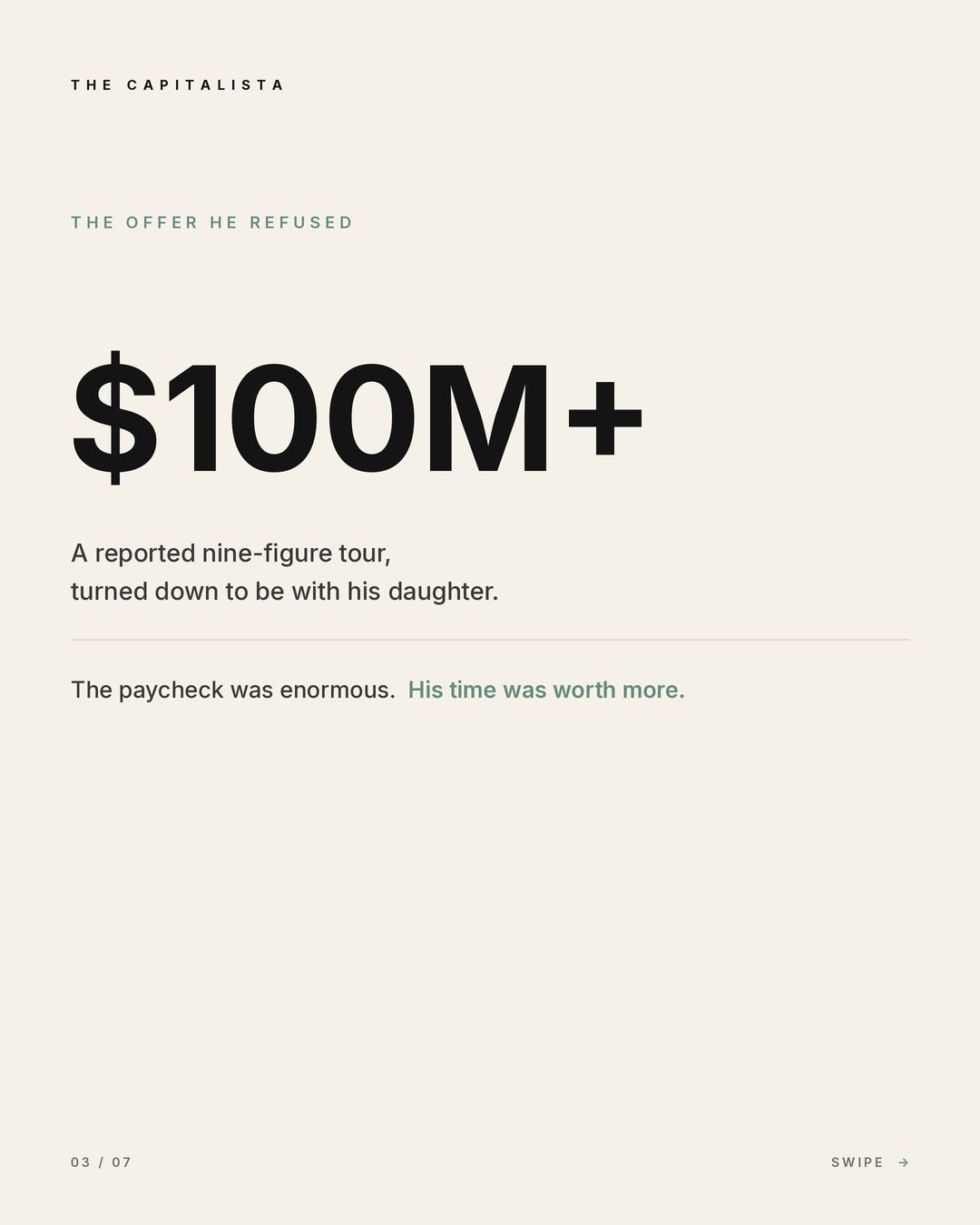
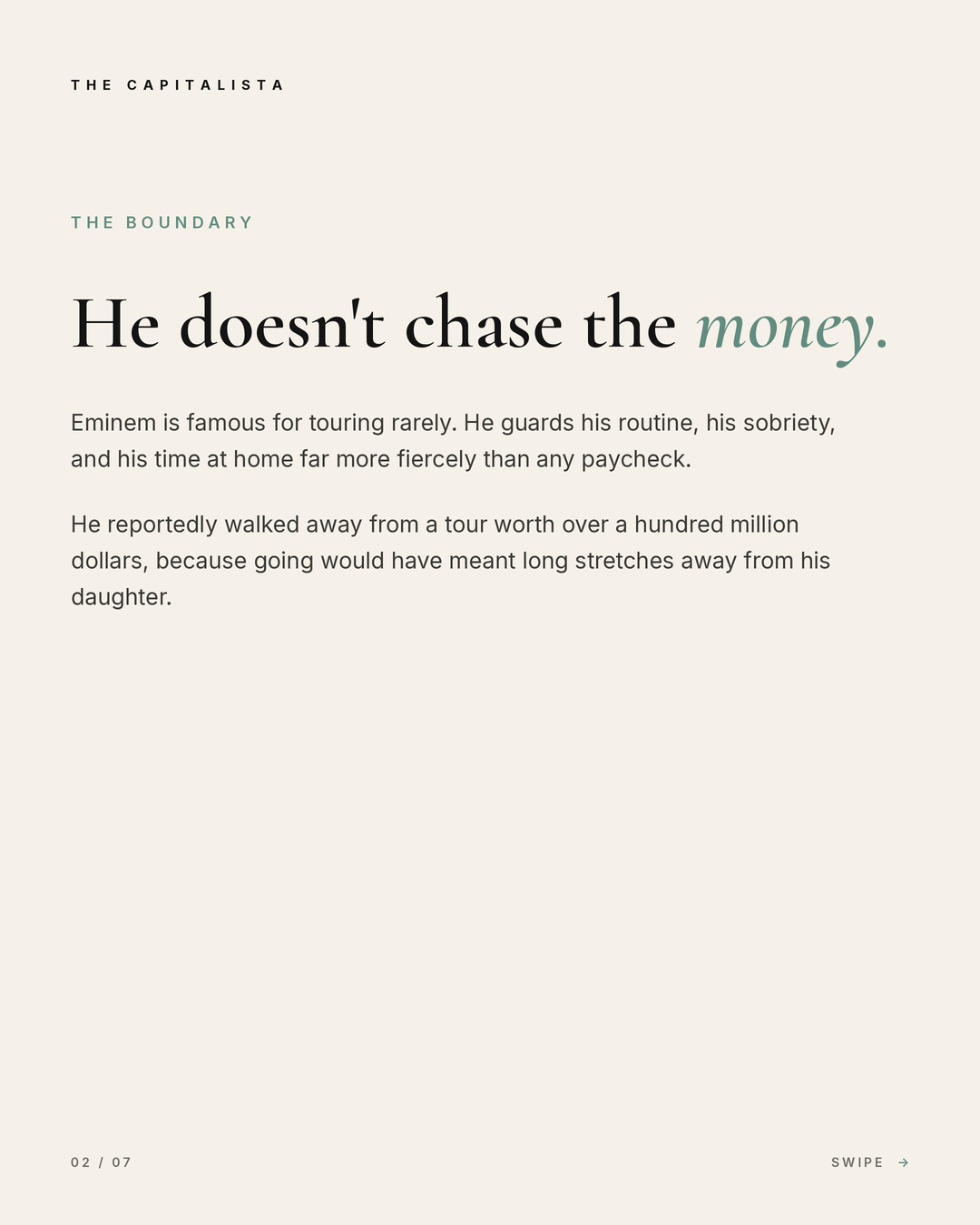
He turned down a proposed tour worth over $100 million with Snoop Dogg and Dr. Dre. Not because he couldn't use the money. Not because the deal was bad on paper. He walked away because accepting it would have required him to give up something more valuable than a nine-figure payday: his time, his family, and his routine.
This decision contains a masterclass in high-ticket pricing that almost every founder, consultant, and operator misses. The lesson isn't about saying no to money. It's about setting a price floor so high that the wrong buyers self-select out, so your calendar stays full of the right work instead of the most lucrative work.
The Setup: A Nine-Figure Offer
The tour would have been massive. Snoop, Dre, and Eminem together would have been a cultural moment and a financial windfall. The logistics alone would have been extraordinary, but the revenue potential was real. Over nine figures. For a single tour.
On paper, it was an easy yes for most people. For Eminem, it was a clear no.
His reasoning was direct: the tour would require him to be away from his daughter, Hailie, for extended stretches. The production schedule, the travel, the time commitment — all of it would take him away from the routine and family stability he had built. And that stability was worth more than $100 million.
This isn't a story about values or sentimentality (though both were part of the decision). This is a story about understanding your real price floor.
The Real Lesson: Your Price Floor Is Your Boundary
Most people think about pricing backwards. They think: what is this worth to the buyer? How much can I charge? What's the highest price that doesn't seem unreasonable?
Those are the wrong questions for high-ticket work. The right questions are: what is this worth to ME? What's the minimum price that makes this worth doing? What is the price where the wrong buyer walks away?
Eminem's price floor wasn't a number. It was a boundary: if taking the work means giving up my family time, then it's not worth the money, period. The price would have to be infinite to justify it. Since it wasn't, the answer was no.
But here's the insight that carries over to every other high-ticket business: when you set a price floor that high, two things happen.
First, the wrong buyers walk away on their own. You don't have to reject them. They self-select out because they can't or won't pay. Second, the buyers who remain are the ones who can afford to be selective, who value quality over discount, who are less price-sensitive and more outcome-focused.
Eminem doesn't tour often. When he does, it's on his terms. That rarity and selectivity is part of what makes the tours valuable. He's not competing on availability or price. He's competing on scarcity and focus.
The High-Ticket Principle: Price to Protect Your Focus
This is the thing most scaling businesses get wrong. They think more money is always better. They'll take the job if the price is right. But "the right price" for a bad fit is still the wrong decision.
A high-ticket pricing strategy reverses this. You don't ask: "What should I charge?" You ask: "How much would I have to charge to make this worth doing at the cost it will take?"
The cost isn't always money. It's:
- The focus it takes away from your best work
- The opportunity cost of the time it consumes
- The type of client it attracts
- The precedent it sets for future negotiations
- The wear on your operations or sanity
For a consultant: taking on a $50k project with a difficult, demanding client might cost you focus on your $200k clients. The real cost is $200k minus whatever else you could do. So the price would have to be high enough to justify that loss. Maybe $300k. A client who won't pay $300k is the wrong client.
For a SaaS founder: adding a feature for one customer to close a $1M deal might mean 6 weeks of engineering time and technical debt. The price for that custom work isn't $1M. It's $1M plus what you give up building for your product roadmap. Maybe the real price is $2M, or it's not worth doing at all.
For an agency: taking on a low-margin, high-maintenance retainer might feel like a win, but it fills your team's calendar with work that makes less money and attracts more like it. The price would have to be high enough that it's the ONLY thing you'll lose focus on. Maybe that's 3x what they're offering.
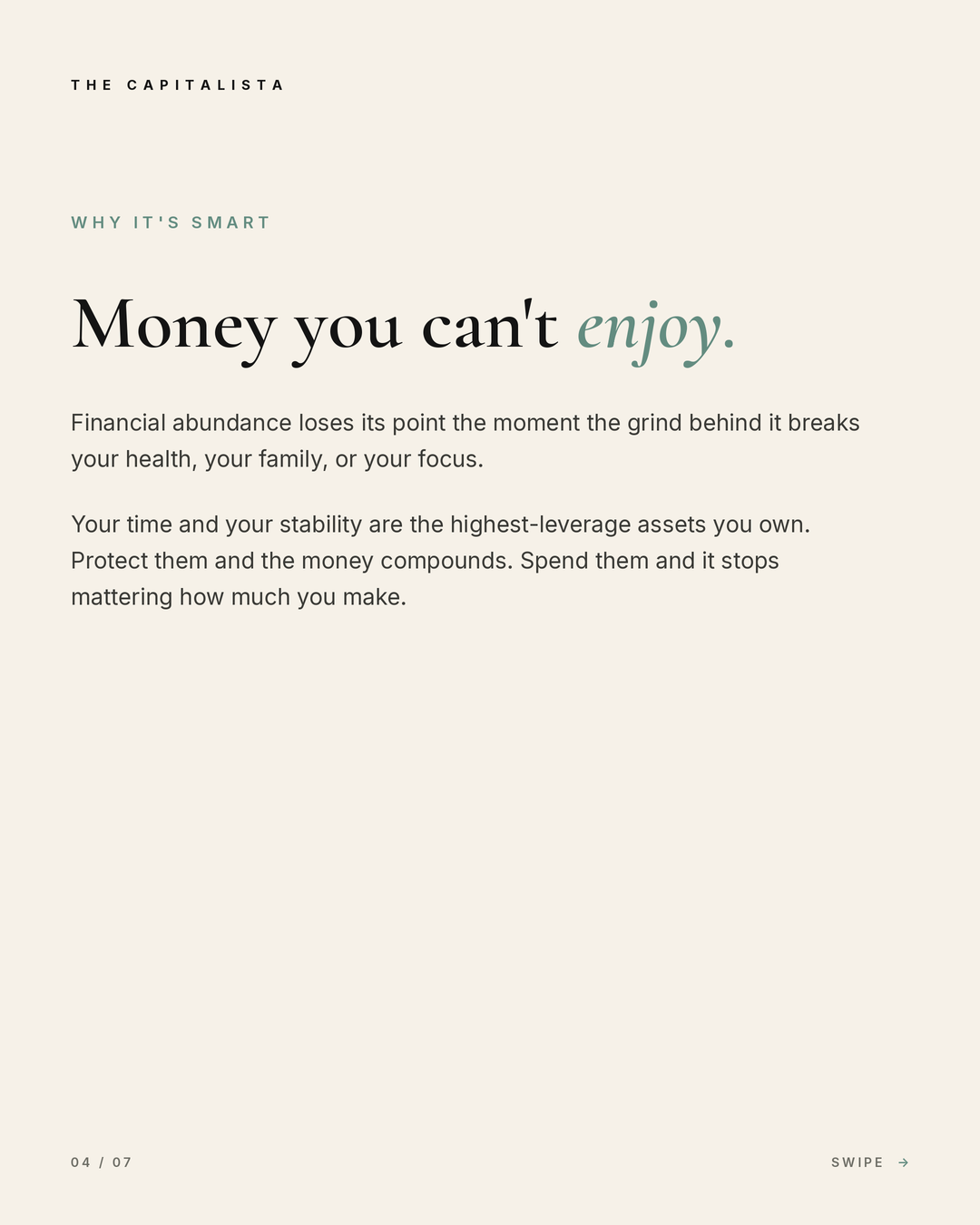
Eminem's $100 million tour would have filled his life with something that didn't serve his priorities. The price wasn't high enough. There IS no price high enough when the cost is your family.
How to Find Your Real Price Floor
Your price floor is the answer to this question: "How much would I have to charge to make this work worth doing, given what I'll have to sacrifice?"
Here's how to find it:
1. List what this work costs you (beyond money)
- Time away from better clients or more important work
- Opportunity cost of what else you could be doing
- Type of relationship or reputation it creates
- Operational burden or distraction it introduces
- Precedent it sets for future clients
- Energy or emotional toll
2. Quantify that cost in dollars
- If it costs you 500 hours and your time is worth $200/hour, that's $100k in opportunity cost
- If it attracts three more similar clients over the next year, and those clients are nightmares, what's that worth? Maybe your sanity is worth $50k
- If it sets a precedent that you'll customize your product, what's the cost of that signal? Maybe $100k more per custom request going forward
- Add it all up
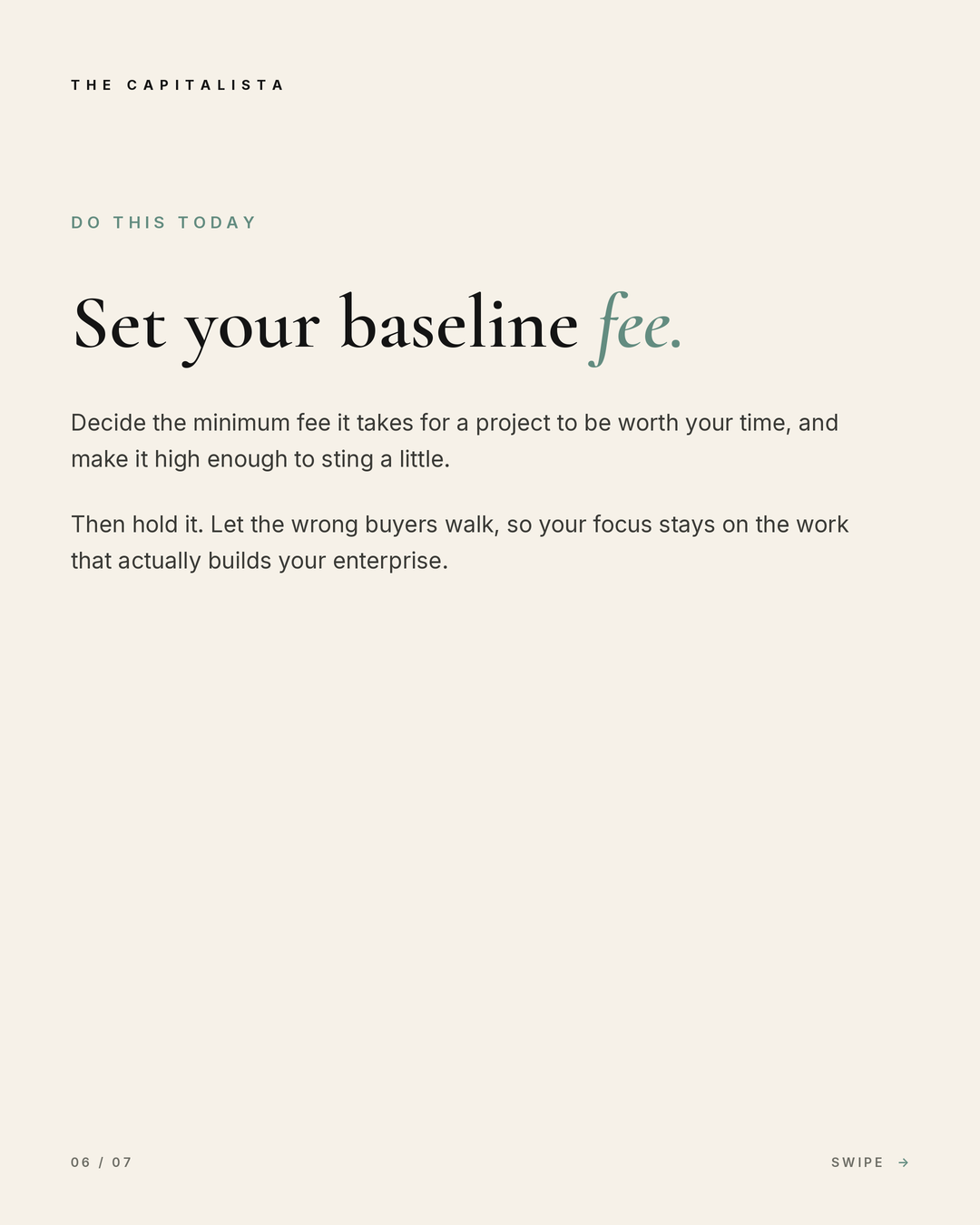
3. Set your minimum price
- Your price floor isn't based on cost-plus or market rate
- It's based on: what you'd make if you took your best alternative (your real opportunity cost) PLUS the discomfort premium
- If your best alternative is a $200k project and this costs you focus, your price is $300k minimum
- Below that, you walk
4. Enforce the boundary
- Below the price floor, you say no
- Below the price floor, you don't negotiate
- Below the price floor, you don't "make it work"
- Below the price floor, the customer doesn't get you
This filters out the wrong buyers immediately. And it signals to the right buyers that you're serious about your work and your time.
Why This Attracts Better Customers
When you set a real price floor and stick to it, something unexpected happens: you attract better customers.
Low-price buyers want a bargain. They're price-sensitive. They'll squeeze you. They'll add scope. They'll demand more than they pay for.
Buyers who can afford your real price floor are different. They're not shopping on price. They're shopping on results, quality, and fit. They respect boundaries because they have their own. They value a focused, selective operator over a desperate one chasing every deal.
Eminem doesn't tour every year. He tours rarely, on his terms, when and where he wants. That scarcity and selectivity makes the tours MORE valuable, not less. People want tickets because he's not everywhere. The price is high because the opportunity is rare.
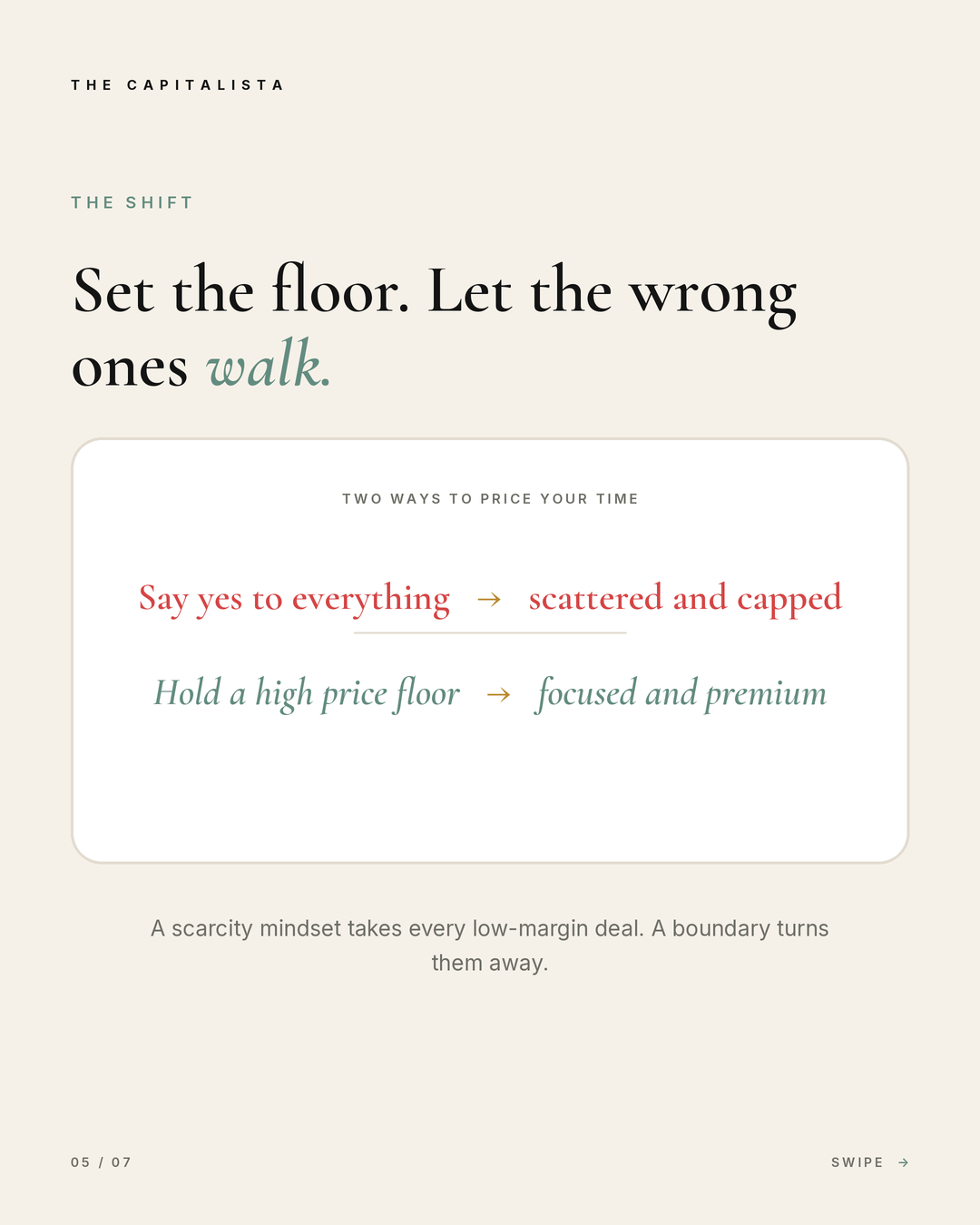
The same principle applies to your work. If you're available for anything at any price, you're a commodity. If you're selective about what you'll take and at what price, you're a specialist. The specialist gets paid more and works with better clients.
What The Capitalista Does
The walk-away price floor isn't just a pricing strategy. It's a financial discipline that protects your margins and your focus.
Capitalista is a fractional CFO service that builds this discipline into your business. We:
- Identify your real price floor by calculating the true cost of work (including opportunity cost and distraction)
- Set pricing that protects your focus, so your calendar fills with high-value work, not just high-revenue work
- Create a pricing model that filters buyers, so the wrong customers self-select out and the right ones stay
- Monitor customer economics, so you know which relationships are actually profitable when you account for the full cost
- Build a walk-away framework, so you can say no to bad deals with confidence
Eminem turned down $100 million because he understood his real price floor. Most businesses don't. They chase revenue and end up with a calendar full of the wrong work, at margins that don't justify the focus they're stealing.
Frequently Asked Questions
What is a price floor?
A price floor is the minimum price at which you'll accept work. It's not based on what the market will bear or what the work costs to deliver. It's based on what the work is worth to YOU, given what you'll sacrifice.
Why would Eminem turn down $100 million?
Because accepting the tour would have required extended time away from his daughter and the routine he's built around his family and sobriety. There's no amount of money worth that trade-off. His price floor for that work was effectively infinite, so he said no.
How do I know if my price is too low?
If you're taking work that makes you less happy, that pulls you away from better clients, or that sets a precedent you don't want to repeat, your price is too low. The price should make that work feel worth the cost. If it doesn't, raise it.
What if my price is so high that nobody buys?
Then you've found your real price floor. You're not the right fit for price-sensitive buyers. You can either lower your price and accept the cost, or you stay selective and work with the buyers who can afford you. Most high-ticket operators stay selective.
Doesn't raising prices lose you customers?
Yes. But you want to lose the wrong customers. High-ticket pricing is a filter. It loses price-sensitive buyers and attracts outcome-focused buyers. The outcome-focused buyers are worth way more to your business.
The Bottom Line
Eminem turned down $100 million because he had a price floor that had nothing to do with money. His floor was his family and his time.
Most businesses operate without a real price floor. They take work if the price seems reasonable, even if the work isn't. They fill their calendars with the wrong jobs. They end up exhausted, less profitable, and working with worse customers.
The high-ticket principle is simple: set your price floor high enough that the wrong buyers walk away. Not to be exclusive or difficult. But to protect your focus, your margins, and your calendar for the work that actually matters.
What's your price floor? What is the cost you're not willing to bear? And what price would have to accompany that cost to make it worth doing?
If you don't have an answer, it's time to build one.