Henry Tudor had almost no legitimate business being King of England.
His blood claim to the throne was weak and distant — the kind of pedigree that, by every tradition of the age, kept a man away from the crown, not on it.
He became king anyway. Not by waiting to be chosen, not by being validated by the establishment, but by winning a battle and letting the victory make him legitimate afterward.
This is the story of how Henry VII took the throne with a thin claim — and why it's one of the most useful lessons a founder, consultant, or ambitious operator will ever internalize: you don't need permission to take the top spot. You take it through execution, and let your results write your credentials later.
How Did Henry VII Become King?
Henry's path to the crown ran straight through a battlefield, not a bloodline.
His claim was tenuous. Henry was descended from royalty through his mother, Lady Margaret Beaufort, a great-granddaughter of John of Gaunt — the fourth son of Edward III. It was a genuine Lancastrian connection, but a distant one, several steps removed and running through a branch that had once been formally barred from the succession. On paper, plenty of people had stronger claims.
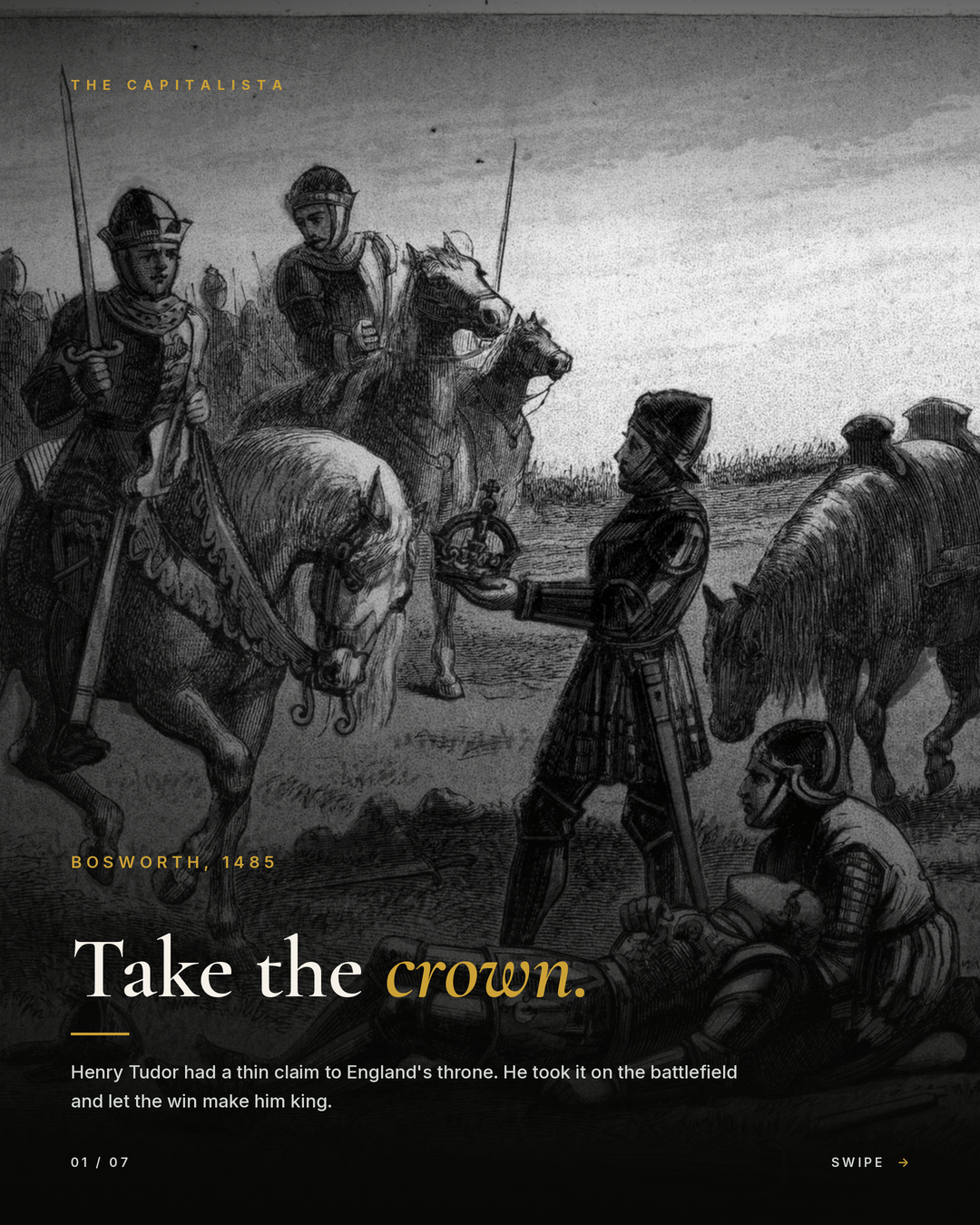
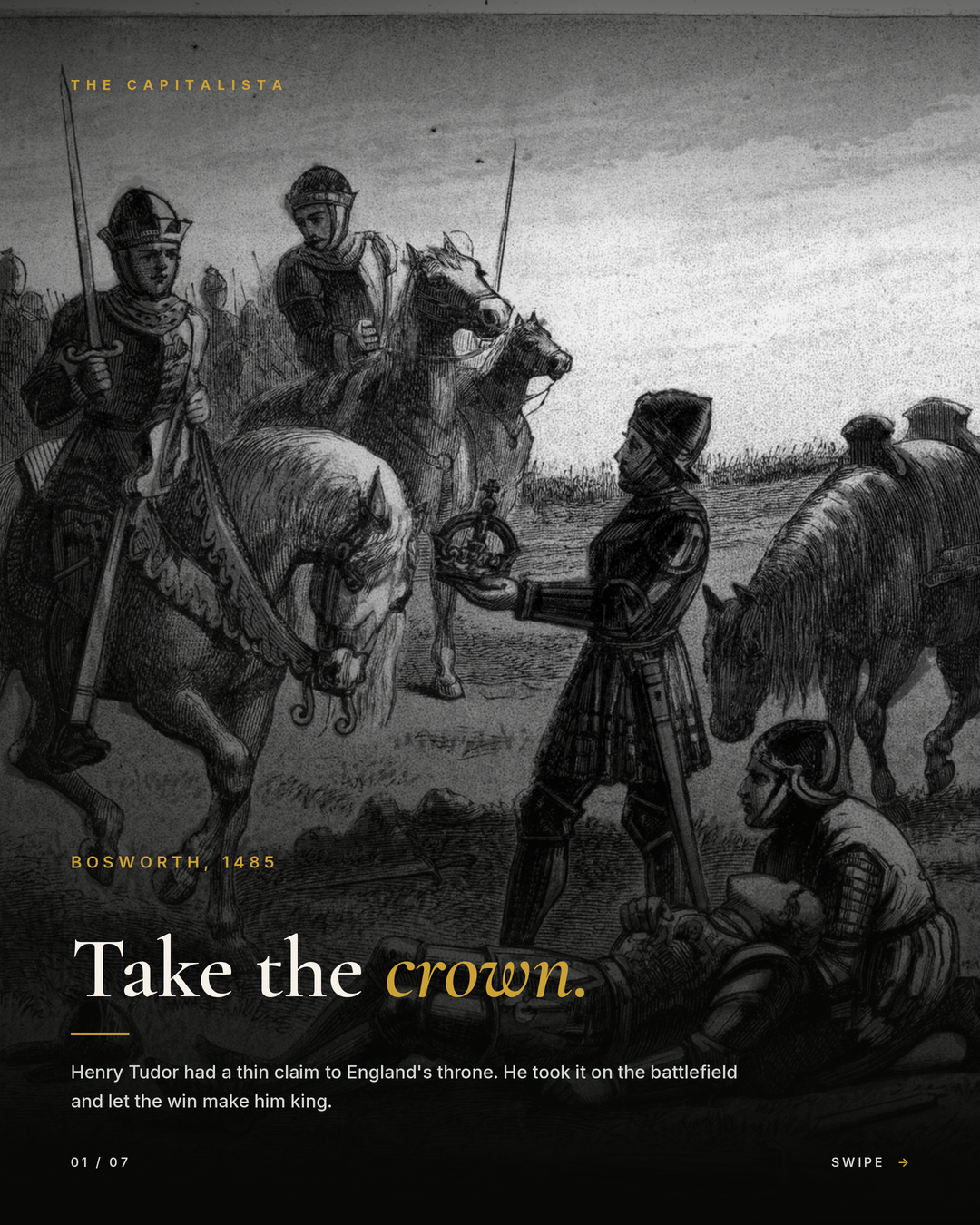
He won it at Bosworth. On 22 August 1485, Henry met the reigning king, Richard III, at the Battle of Bosworth Field. Richard died fighting. Henry won the day — helped enormously by the fact that several of Richard's key allies, including the Stanley brothers and the Earl of Northumberland, switched sides or simply sat the battle out at the decisive moment. As legend has it, Richard's fallen crown was retrieved and placed on Henry's head right there on the field.
That's the blunt answer to "how did Henry VII become king": he took the throne by force of arms and execution, not by right of birth.
The Real Genius: He Legitimized Himself After the Win
Winning the battle was only half of it. What Henry did next is the part worth studying.
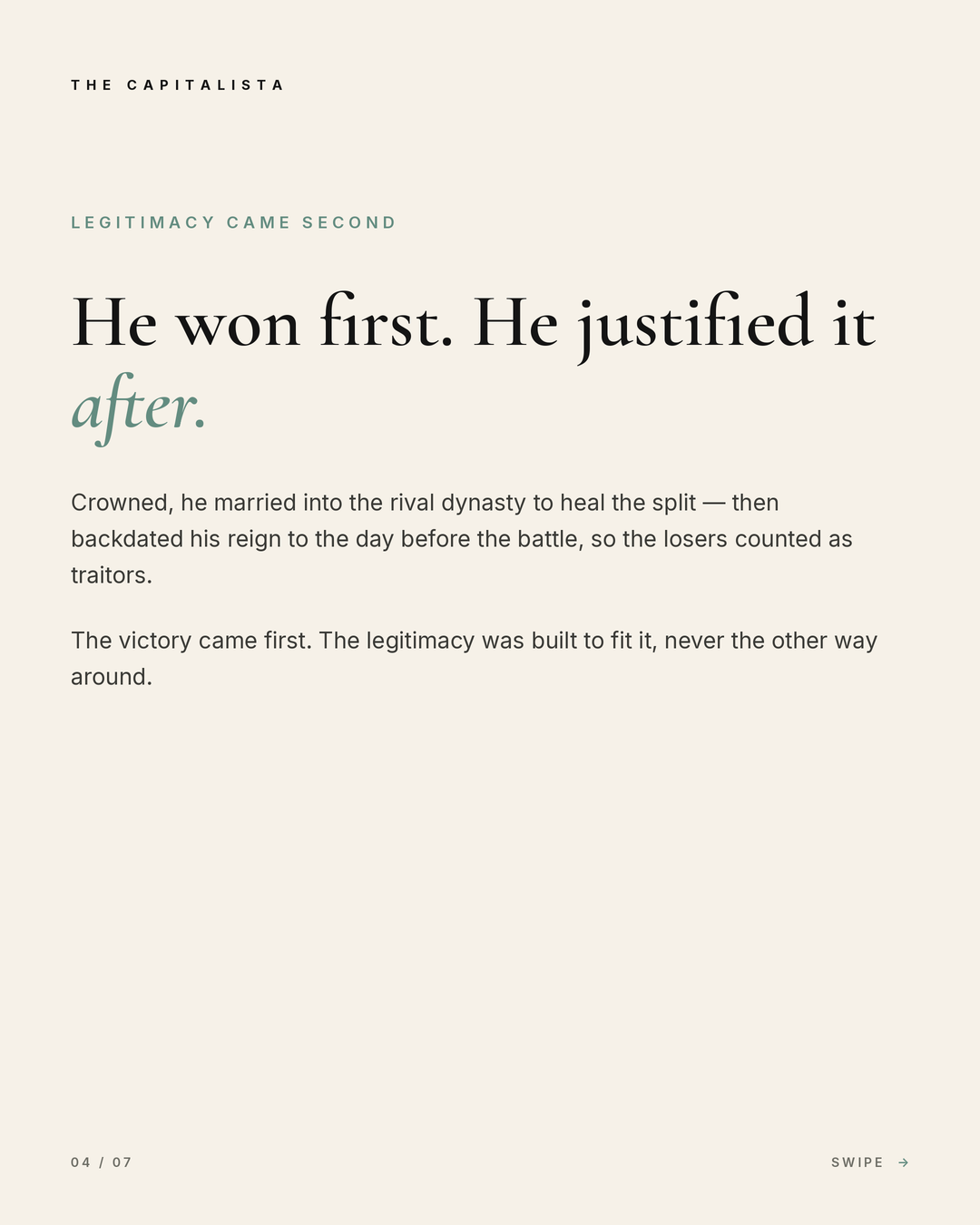
He declared himself king by right of conquest — retroactively. Henry dated the start of his reign to 21 August 1485, the day before Bosworth. It's a small administrative detail with enormous consequences: it meant everyone who had fought for Richard was, legally, a traitor. Henry could confiscate their lands and reward his own supporters. He didn't just win the battle; he rewrote the timeline so the winners were always the rightful side.
He married into the rival dynasty. In 1486, Henry married Elizabeth of York, daughter of Edward IV — whose Yorkist lineage was, frankly, stronger than his own. The marriage united the warring houses of Lancaster and York, ended the Wars of the Roses, and lent his claim a legitimacy it never had by blood.
Notice the sequence. The victory came first. The legitimacy was manufactured to fit it — never the other way around. Henry didn't wait until his claim was airtight to act. He acted, won, and then built the justification around the result.
Why "Right of Conquest" Beats "Right of Birth"
There's a deep principle here that survives long after medieval politics stopped mattering.
Legitimacy feels like a prerequisite — something you must possess before you're allowed to claim power. Henry's life says the opposite. Legitimacy is frequently a consequence. It follows the win. It gets assigned, retroactively, to whoever had the nerve and capability to take the position and hold it.
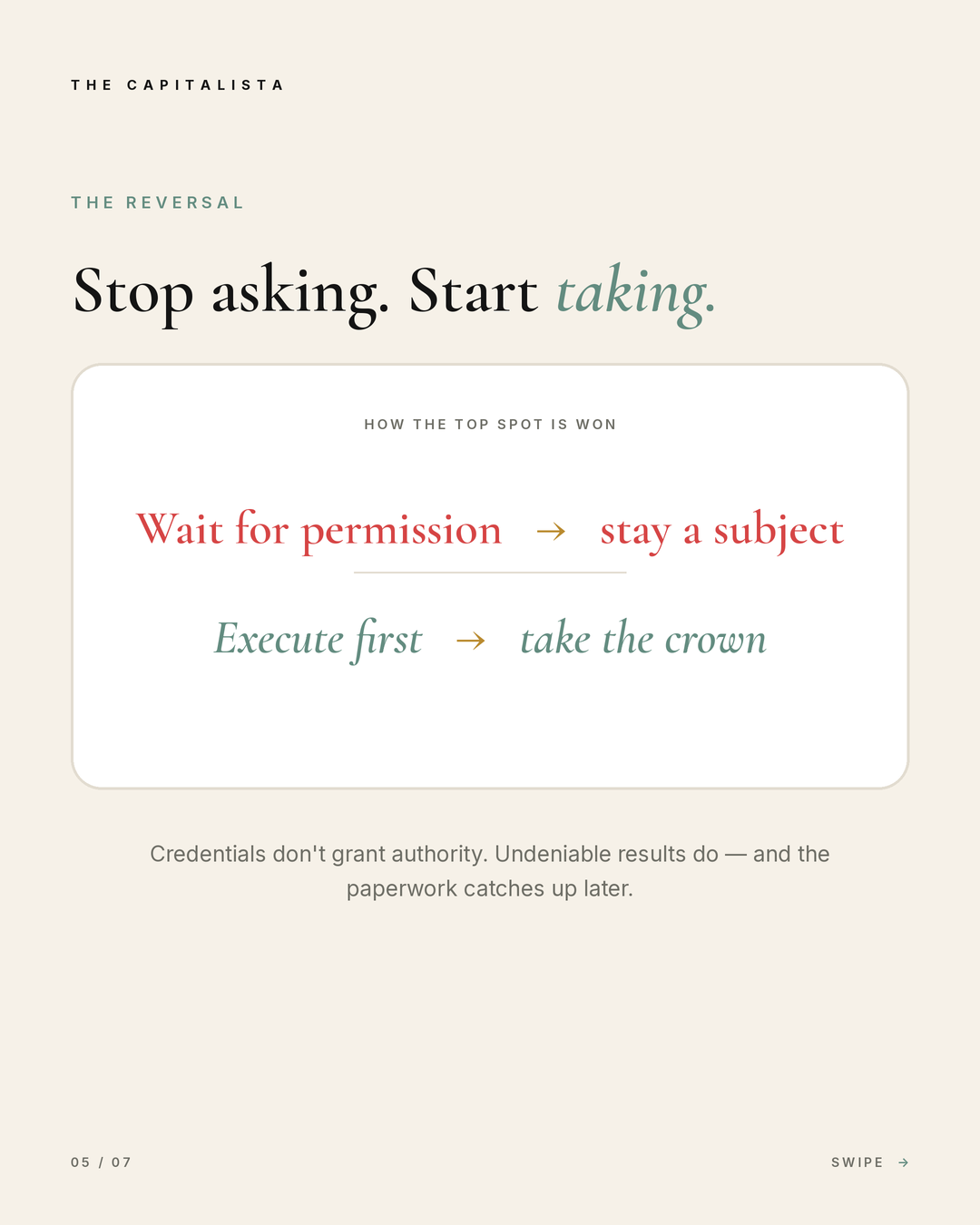
The world tells you the order is: get the credentials, earn permission, then step up. History, again and again, shows the real order: step up, produce the undeniable result, and watch the credentials and permission catch up to you.
The Business Lesson: You Don't Need Permission to Take the Top Spot
Now bring it into your own career.
Countless capable operators let a missing credential hold them hostage. No Ivy League degree. No decade-long track record in the industry. No blessing from the established players. So they hang back, targeting the safe middle of the market and waiting for someone to declare them ready to compete for the top tier.
That wait is a self-imposed exile. You do not need institutional permission or a flawless pedigree to claim the top spot in your niche. True "kings" — the operators who dominate a category — take the position through undeniable, high-leverage execution, and let their victories serve as their credentials.
Command the space with authority. Deliver results your competitors can't argue with. Let your revenue speak for itself. The legitimacy will be built around the win, exactly the way Henry built his.
The Credential Trap
Waiting for a credential feels responsible. It's actually the safest-looking way to guarantee you never break into the top tier.
The trap works like this: you tell yourself you need one more certification, one more year of experience, one more marquee logo before you're allowed to charge premium fees or approach elite clients. But that finish line moves. There's always another credential to chase, and while you're chasing it, the operators who simply acted are booking the clients you talked yourself out of.
Richard III had the stronger claim on paper. Henry had the willingness to execute. Only one of them was king by nightfall.
How to Take Your Crown
You take the top spot the way Henry did — by moving before you feel entitled to. Here's the practical version.
1. Pick the client you feel "unready" for
Identify one high-tier, elite prospect you've been avoiding because you assumed you needed one more credential first. That avoidance is the tell. Go there.
2. Approach with the assumption of authority
Reach out today, on the flat assumption that your current results already make you the only logical choice. Not arrogance — certainty. You're not asking permission to compete; you're presenting the obvious answer.
3. Deliver an undeniable result
Conquest only sticks if you actually win. Over-deliver on the outcome that matters most to that client, so the result becomes impossible to dispute.
4. Let the win write your credentials
One elite result becomes your case study, your proof, your new baseline. Your victories become the pedigree you never waited for. Then repeat.
The Financial Backbone of a Bold Claim: What The Capitalista Does
Here's the catch that separates a bold claim from a reckless one: "let your results speak" only works if the results are real — and provable. Henry could rewrite the record because he'd actually won the battle. A claim with no victory behind it is just noise.
In business, the victory is your numbers. Margins that prove your model works. Revenue that backs your authority. Financial results an elite client — or an investor, or an acquirer — can look at and conclude you're the only logical choice.
That's what Capitalista is built to give you. We're a fractional CFO service that makes sure your results outrank your pedigree. Concretely, we:
- Own your margins and pricing, so you can charge like the top of the market and actually make it profitable.
- Run your cash flow and forecasting, so a bold claim is backed by a stable, fundable business — not a house of cards.
- Turn your performance into hard proof — the numbers, dashboards, and metrics that make your authority undeniable to the clients and partners you're targeting.
- Translate the finances into decisions, so every aggressive move you make is grounded in what the business can actually support.
Take the throne. We'll make sure the numbers behind you are strong enough that no one questions the claim.
Frequently Asked Questions
How did Henry VII become king?
Henry Tudor defeated Richard III at the Battle of Bosworth Field on 22 August 1485 and was crowned king. He took the throne by conquest rather than by a strong hereditary claim, then consolidated his legitimacy afterward.
Why was Henry VII's claim to the throne weak?
His royal descent came through his mother, Margaret Beaufort, from a distant and once-barred branch of the Lancastrian line. Several other figures had stronger hereditary claims, which is why his path to power ran through battle and marriage rather than birthright.
Who did Henry VII defeat to become king?
He defeated King Richard III, the last Yorkist king, who was killed at Bosworth. Richard's defeat was sealed when key allies, including the Stanley brothers, switched sides or withheld support.
Why did Henry VII marry Elizabeth of York?
He married Elizabeth of York in 1486 to unite the rival houses of Lancaster and York, end the Wars of the Roses, and strengthen his own claim through her superior Yorkist lineage.
When did the Tudor dynasty begin?
The Tudor dynasty began with Henry VII's victory in 1485 and lasted until the death of Elizabeth I in 1603 — 118 years founded on a single battlefield gamble.
The Bottom Line
Henry VII had a weak claim and took the crown anyway — then built the legitimacy to match it. His story is a standing rebuke to anyone waiting for permission to play at the top.
Credentials don't grant authority. Undeniable results do, and the paperwork catches up later. So stop waiting for the certification or the blessing. Reach out to one elite prospect today, on the assumption that your results already make you the only logical choice. Take the crown — then let the win make you king.