In November 2023, one of the biggest pop stars in the world quietly did something more valuable than releasing a hit single.
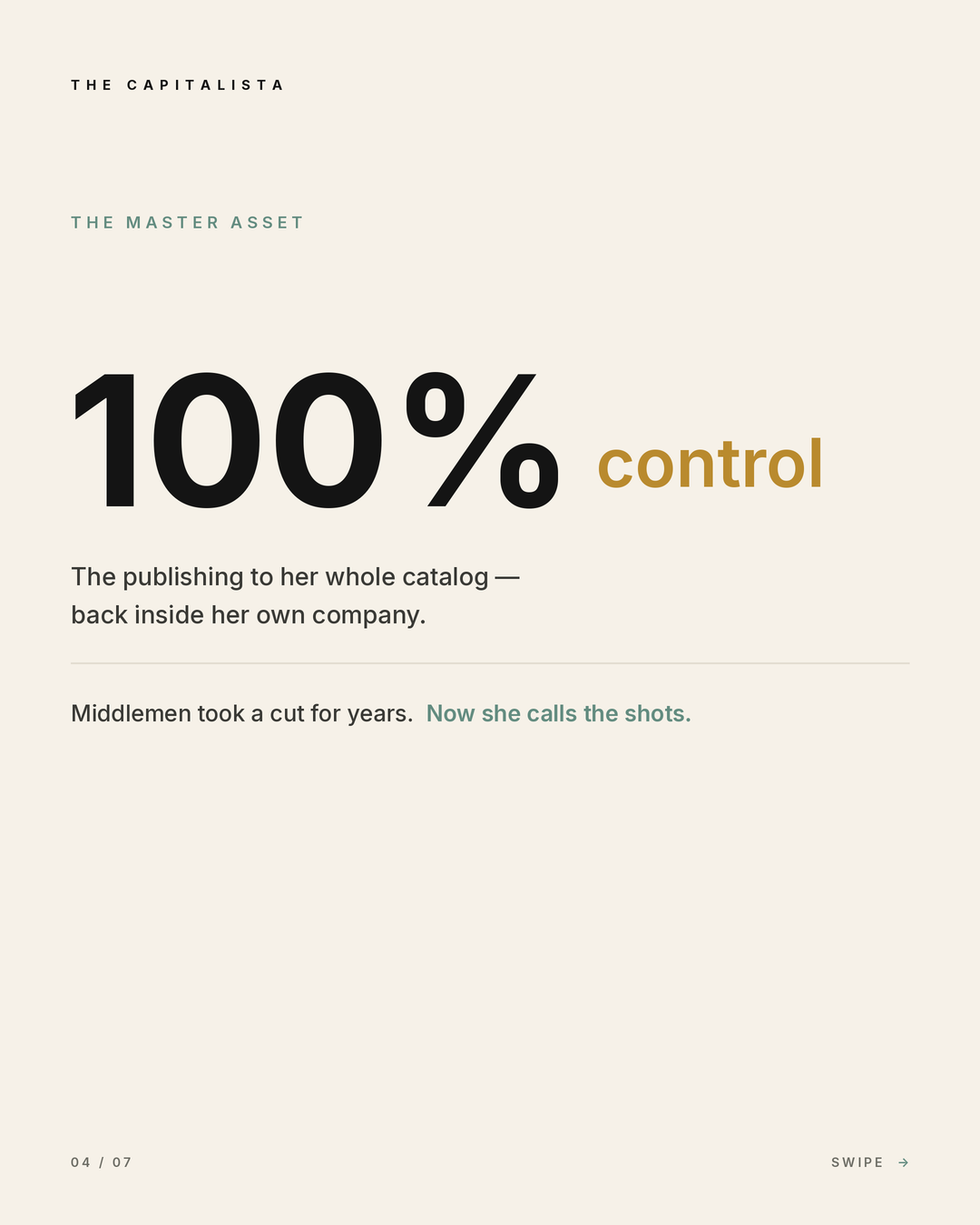
Dua Lipa bought back the publishing rights to her own songs and moved her catalog inside a company she controls.
No new album. No viral moment. Just a founder taking back ownership of the asset at the center of her business. And in that single move sits one of the most important, and most ignored, lessons in building real wealth: the money is not in the work you do. The money is in the asset you keep.
This post breaks down what Dua Lipa actually did, what "own your masters" really means (there is a common mix up worth clearing up), and how to apply the principle if you sell services, code, frameworks, or any other form of intellectual property.
What Dua Lipa Actually Did
Dua Lipa signed with the management company TaP Music in 2013, at the very start of her career. By 2022 she had left that management roster, reportedly after a dispute over her cut of the deals being made in her name. Then, on November 2, 2023, TaP Music Publishing announced it had sold Dua Lipa back the publishing rights to her songs.
She now holds that catalog inside Radical22, her own independent media and management company, which also houses Radical22 Productions and her media brand Service95, all fully owned by her. Radical22 signed a global administration deal with Warner Chappell Music to handle the day to day publishing admin, while ownership and control stay with Dua.
Her own words say it best. Commenting on the deal, she said: "It's been a long road, but I am very happy to finally own my publishing. My music is my life's work, and it's important for me to be the person who decides what happens with it."
That is the entire thesis. Your work is your life's work. The person who decides what happens with it should be you.
Masters vs Publishing: What "Own Your Music" Really Means
Here is the nuance most articles skip, and it matters for accuracy. In music there are two separate sets of rights:
- The master recording: the specific recorded version of a song. These are usually owned by a record label.
- The publishing: the rights to the underlying composition, the melody and lyrics.
The phrase "own your masters" has become a catch all rallying cry for artists taking control of their work, popularized by high profile ownership battles across the industry. But strictly speaking, what Dua Lipa reclaimed was her publishing, not necessarily her master recordings, which for most major label artists remain with the label.
Why does the distinction matter to you as a founder? Because it teaches precision. "Owning your work" is not one thing. It is a stack of separate rights, and each one can be sold, licensed, or kept independently. The winners in any creative or knowledge business know exactly which rights they are handing over and which they are keeping. Vague generosity with your IP is how you lose the asset without realizing it.
Why Ownership Beats a Big Upfront Check
Accepting a large upfront payment in exchange for permanently surrendering the rights to your work is one of the most common wealth traps there is. The check feels like a win. It is liquid, it is immediate, and it is bigger than anything else on the table that month. So you sign.
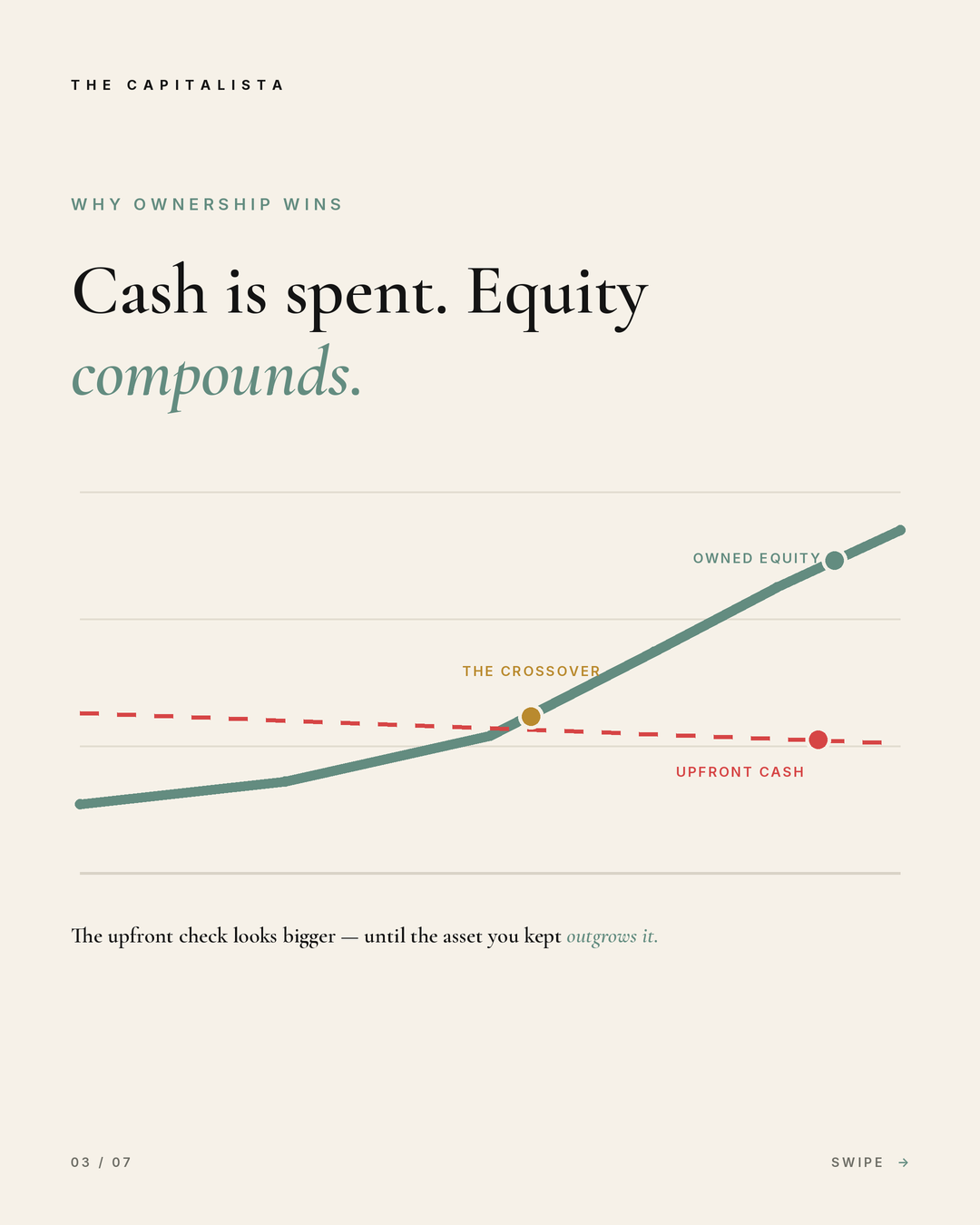
The problem is that a one time payment is spent once. An owned asset compounds. It keeps earning, it can be licensed again and again, and it can be sold later as equity rather than traded away as a fee. The upfront check almost always looks bigger at the moment of signing. Give it enough time, and the asset you kept quietly outgrows the cash you took.
True financial leverage belongs to the operator who values the long term compounding equity of an asset over the superficial comfort of immediate liquidity. That is the difference between earning income and building wealth.
The Business Lesson: Stop Signing Away Your IP
Most consultants, agencies, and specialized service providers do the opposite of what Dua Lipa did. To close a standard corporate retainer, they hand over the perpetual rights to their custom code, their proprietary frameworks, or their unique systems. The client asks for it, the deal is on the line, and so they sign the master asset away to win a monthly fee.
That is a bad trade. You are surrendering a compounding asset to secure temporary income. You do the hard, creative work of building the system, and then you give away the very thing that makes it valuable forever.
The reframe is simple. When you build something reusable, that thing is a master asset. Treat it the way an artist treats a catalog: as the engine of the business, not a deliverable to be given away.
License, Don't Assign
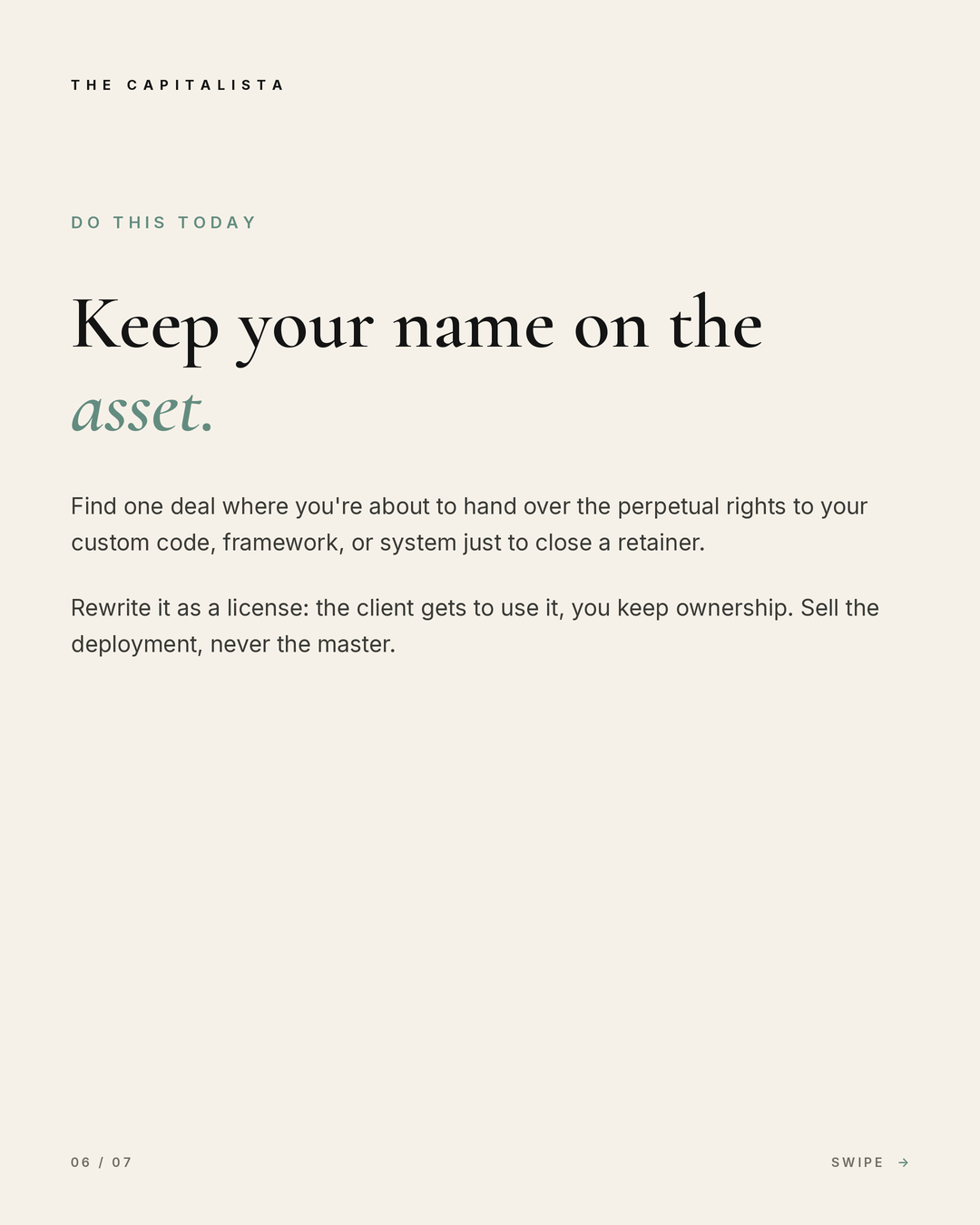
There is a clean, practical way to keep your asset and still close the deal: offer a license instead of an assignment.
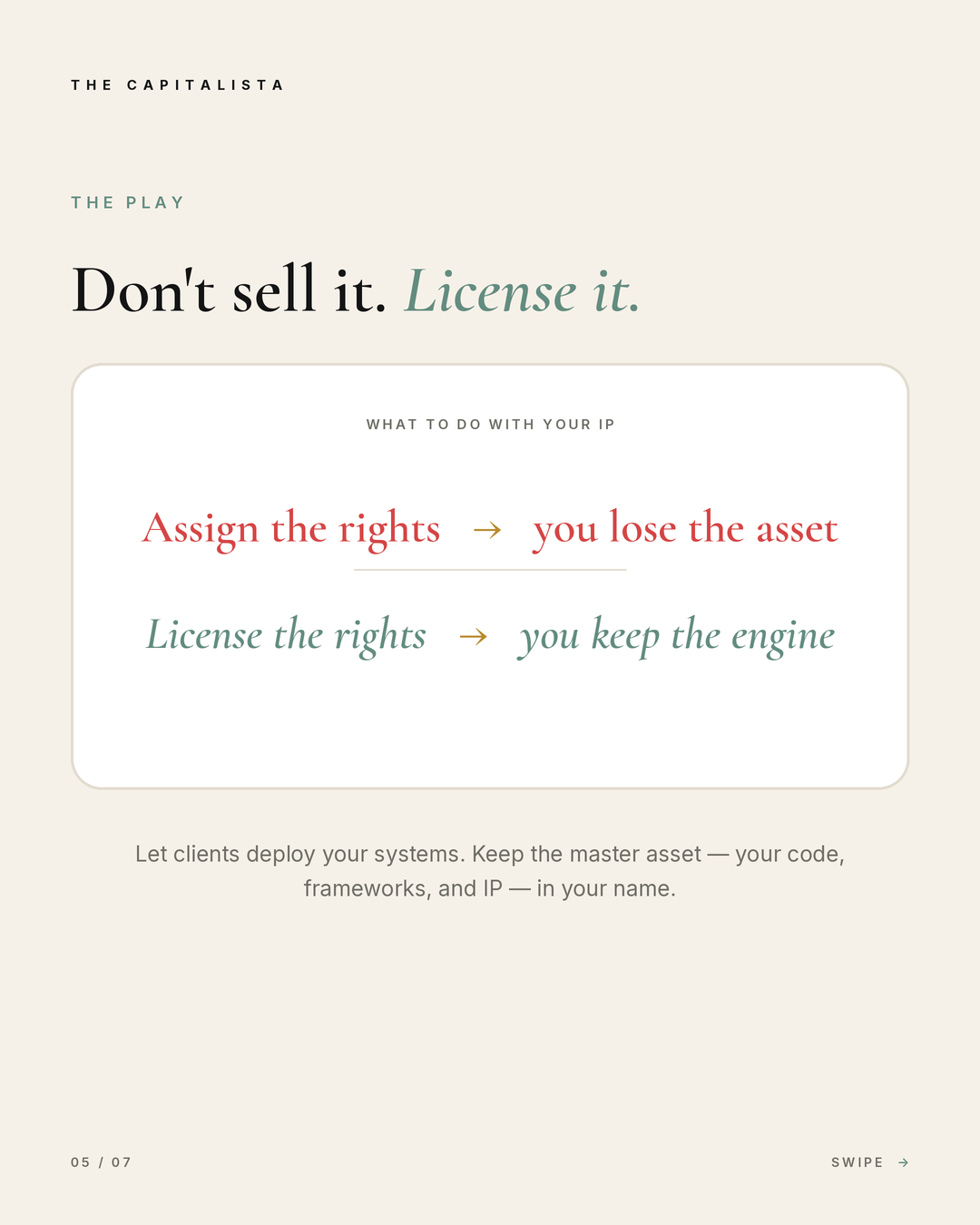
- Assigning the rights means you transfer ownership. The client now owns your work, and you lose the asset permanently.
- Licensing the rights means you keep ownership and grant the client permission to use the work under agreed terms. They get to deploy your system. You keep the master.
Sell the deployment, never the master. Let clients run your frameworks, your code, and your systems inside their business for as long as the license lasts. But keep your name on the underlying asset, so you can license it to the next client, and the one after that.
This one change turns a business that sells its work away into a business that owns a growing library of licensable assets. That is the structural difference between a contractor and an enterprise.
How to Protect Your IP in Your Next Deal
You do not need a legal team the size of a record label. You need to be deliberate. Here is how to apply the principle starting with your very next contract.
1. Find the assignment clause
Open the contract you are about to sign and look for any language that transfers, assigns, or grants perpetual and exclusive rights to your work. That clause is where you quietly lose the asset.
2. Convert it to a license
Rewrite it so the client receives a license to use the work rather than ownership of it. Define the scope: what they can use, for how long, and whether the license is exclusive or non exclusive.
3. Separate your reusable assets from custom work
Keep a clear line between the proprietary systems you reuse across clients (which you should always retain) and the bespoke work built for one client (which is easier to hand over). Protect the reusable core at all costs.
4. Price the ownership, not just the hours
If a client truly insists on owning your master asset outright, that is not a retainer anymore. It is an acquisition. Price it like one, at a number that reflects giving up a compounding asset forever, not a monthly fee.
What The Capitalista Does
Here is where most founders get stuck: they can feel that their IP is valuable, but they cannot see it on paper, so they trade it away cheaply. That is a numbers problem, and it is exactly the one we solve.
Capitalista is a fractional CFO service for founders who want to build equity, not just collect income. We help you treat your intellectual property as a real balance sheet asset rather than an afterthought. Concretely, we:
- Value your IP and your reusable systems so you can see the asset you have been giving away for free.
- Price licensing over lump sums, so every deal builds a compounding revenue stream instead of a one time payout.
- Model the long game, showing you in hard numbers how a retained, licensed asset outperforms an upfront check over time.
- Structure your deals for ownership, so you always keep the master and negotiate from a position of financial strength.
Dua Lipa had a manager who spent two years getting her catalog back. Most founders do not have that. What you can have is a CFO who makes sure you never sign the asset away in the first place.
Frequently Asked Questions
Did Dua Lipa buy back her masters?
Dua Lipa bought back her publishing rights, the rights to the underlying compositions of her songs, from TaP Music Publishing in 2023. Master recordings, the specific recorded versions, are typically owned by a record label, so "own your masters" is best understood here as her taking control of her publishing and catalog.
What is the difference between masters and publishing?
The master is the recorded version of a song, usually owned by a label. Publishing covers the underlying composition (melody and lyrics). They are separate rights that can be owned, sold, or licensed independently.
Why did Dua Lipa leave her management company?
She left TaP Music's management roster in 2022, reportedly over a dispute about her share of the income from deals made in her name, before later buying back her publishing and building her own company, Radical22.
What is Radical22?
Radical22 is Dua Lipa's independent media and management company. It houses her publishing, her production arm, and her media brand Service95, all fully owned by her, with a global administration deal in place with Warner Chappell Music.
Should you own your masters as a business owner?
If you build reusable systems, code, or frameworks, yes. Retaining ownership of those core assets and licensing their use, rather than assigning the rights away, is how a service business builds compounding equity instead of trading its best work for one time fees.
The Bottom Line
Dua Lipa's most valuable move was not a song. It was reclaiming ownership of the asset behind the songs, and insisting on being the person who decides what happens with her life's work.
The same choice sits in front of every founder who builds something reusable. You can take the upfront check and sign the asset away, or you can keep the master, license the use, and let the equity compound. Own your masters. Then let clients rent the engine, while you keep the keys.