Simone Biles walked into the Tokyo Olympics carrying a weight almost no other athlete in the world has ever had to carry
being widely considered the greatest gymnast in history, with an entire nation expecting nothing less than gold.
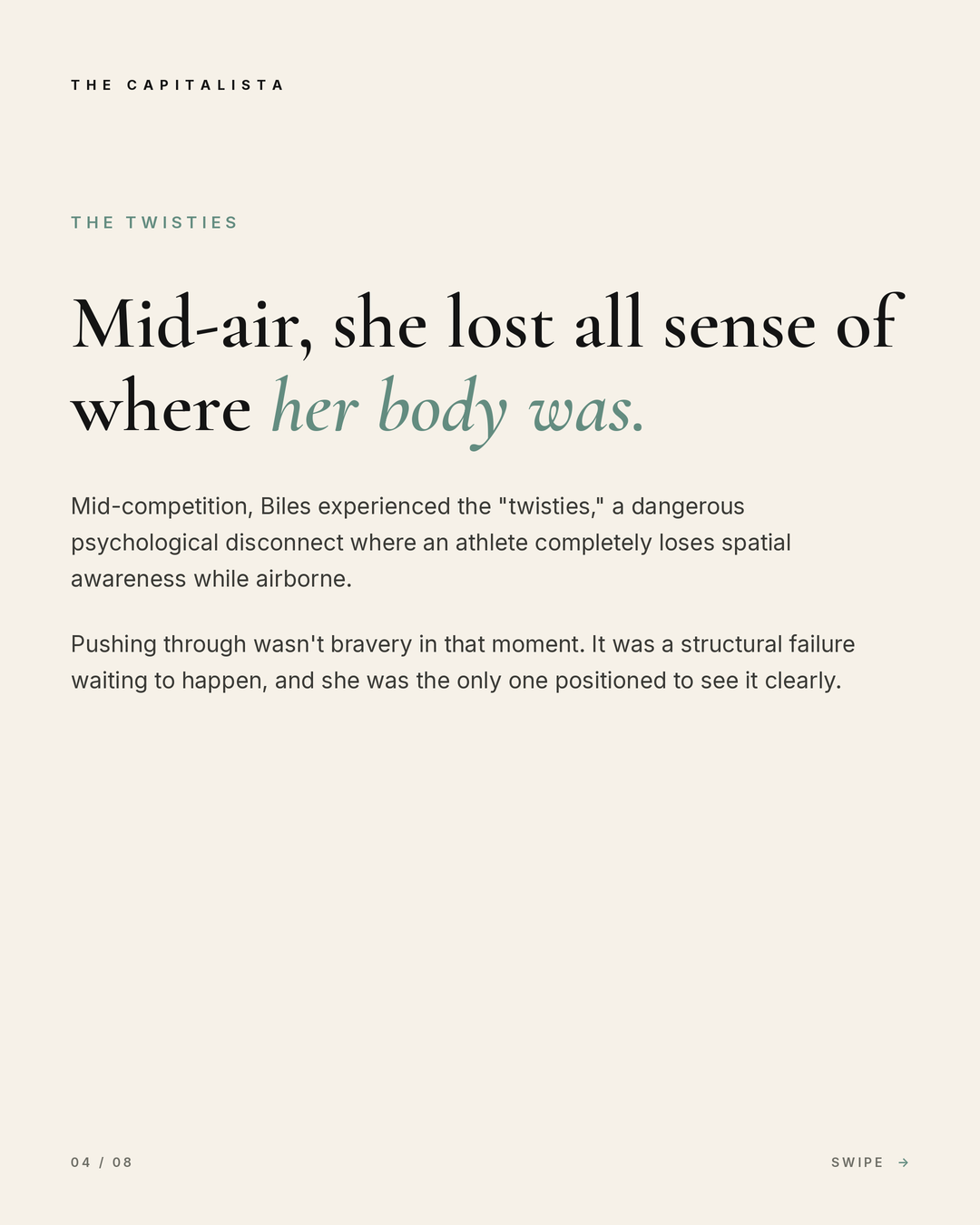
Mid-competition, something happened that no amount of talent or preparation could override. She experienced the "twisties," a dangerous psychological disconnect where a gymnast completely loses spatial awareness while airborne, unable to reliably sense where her body is in relation to the ground. For a gymnast performing skills that involve multiple twists and flips several feet above hard equipment, this isn't a minor inconvenience. It's a serious, potentially catastrophic safety risk.
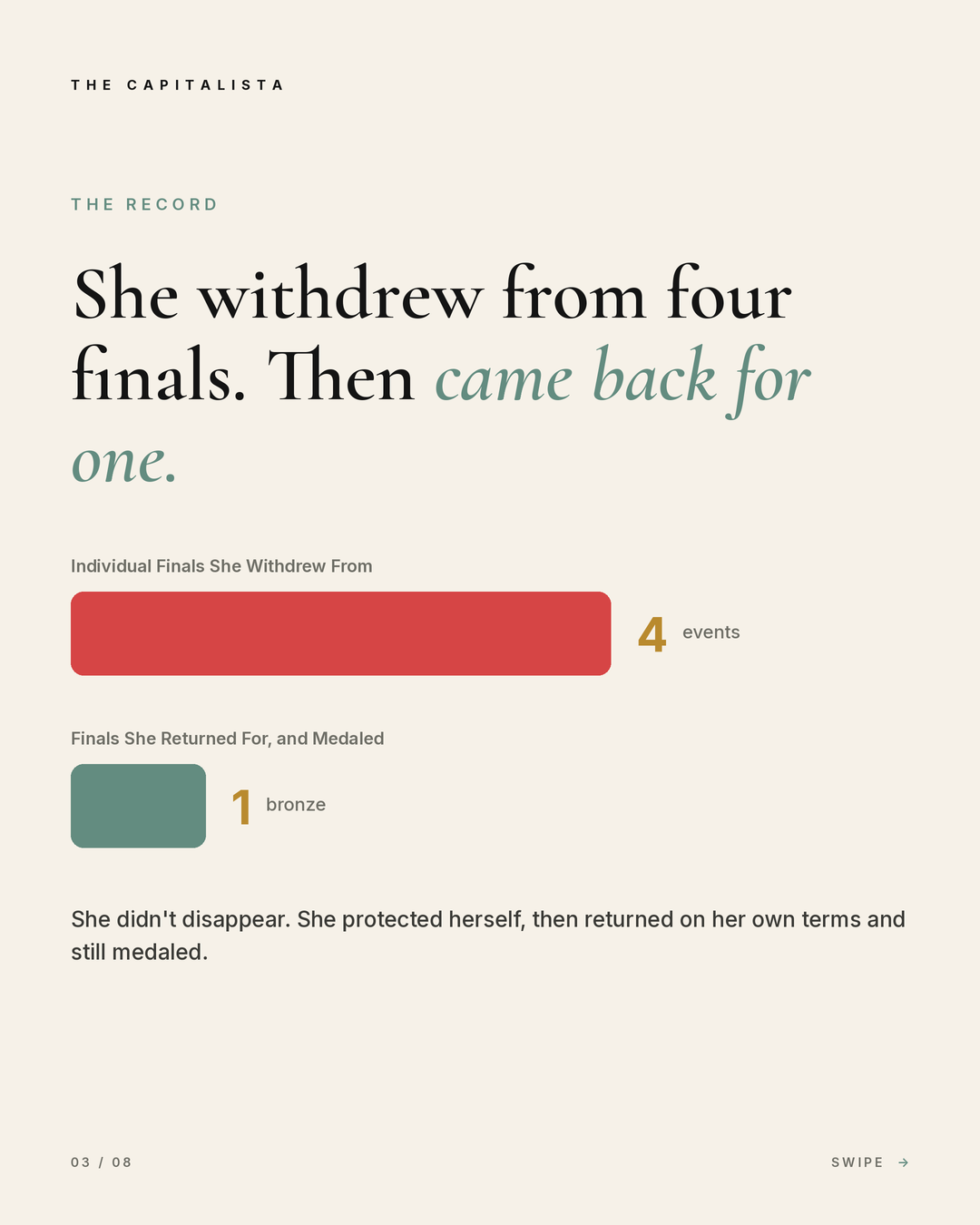
She withdrew. Not just from one event, but eventually from four individual finals, at the exact moment the entire world was watching and expecting her to compete for gold.
Then, on her own timeline, she came back. She competed in the balance beam final and won bronze.
The reaction to her withdrawal was fiercely split, and the debate itself reveals exactly why this story matters far beyond gymnastics. A significant portion of the public treated her decision as quitting, as a failure of mental toughness at the moment it mattered most. But a closer look at what she actually did reveals something far more instructive: a masterclass in recognizing a compromised position and refusing to keep pushing it, regardless of external pressure.
The Myth of Unconditional Perseverance
Society tells a very consistent story about perseverance: push through, no matter what, and quitting is a personal failure. This story is repeated so often, in so many contexts, that most people never stop to examine whether it's actually true.
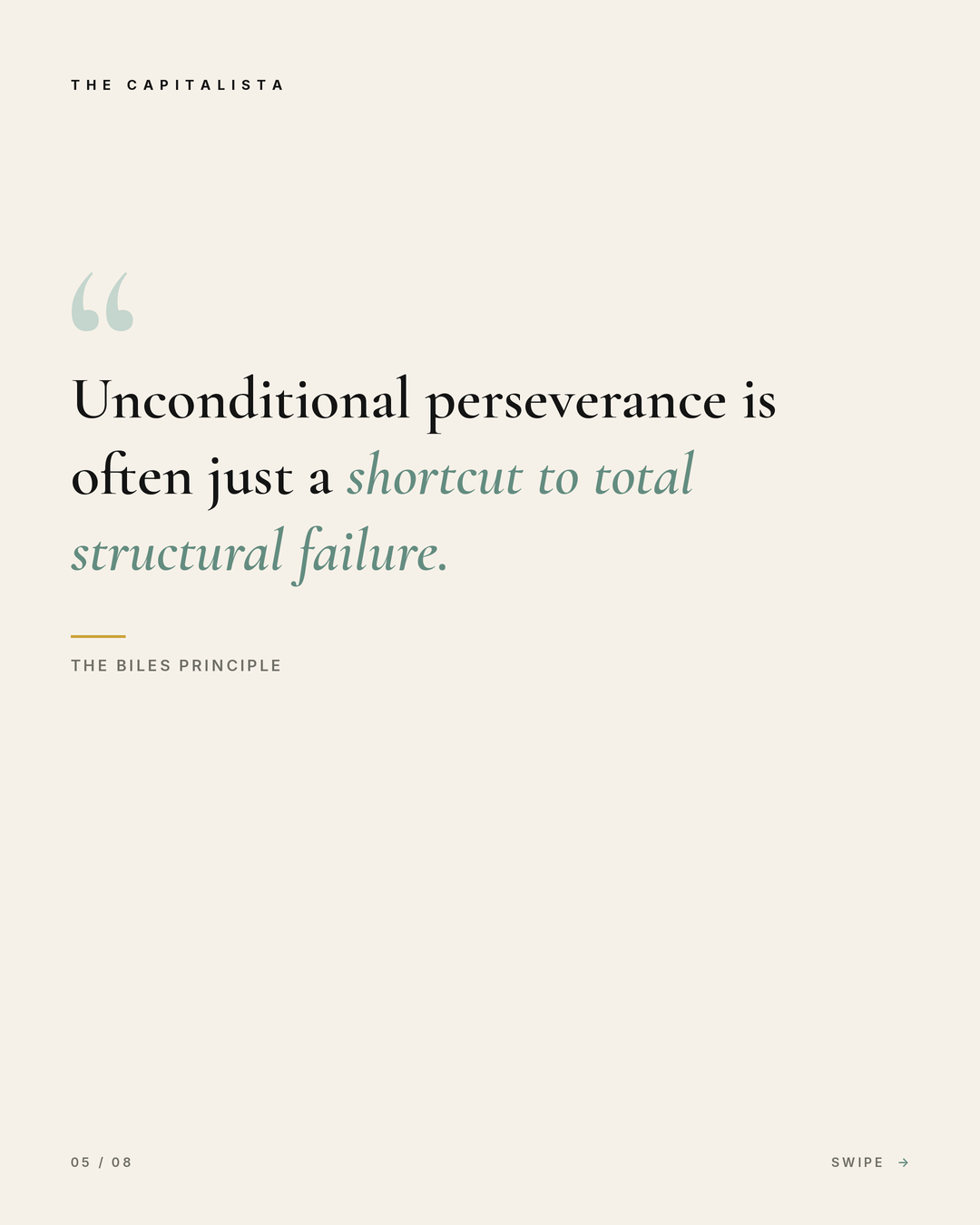
It isn't, at least not unconditionally. Unconditional perseverance, the refusal to ever stop regardless of changing circumstances, isn't discipline. It's often just a shortcut to total structural failure. The strength required to keep going is only valuable when the underlying position is still sound. When the position itself has become compromised, structurally unsafe, or fundamentally unwinnable, continued pushing doesn't demonstrate toughness. It demonstrates an inability, or an unwillingness, to reassess.
Biles' situation makes this distinction unusually visible because the stakes were physical and immediate. Continuing to compete while experiencing the twisties risked serious injury, the kind that could have ended her career entirely. But the same underlying dynamic, continuing to push a compromised position because stopping feels like failure, shows up constantly in business, just without the same dramatic, visible consequences.
What She Actually Did, and Why It Wasn't Quitting
It's worth being precise about the distinction here, because "quitting" and "strategic withdrawal" get conflated constantly, and the conflation is exactly what makes this lesson hard for most people to apply.
Quitting, in the pejorative sense people mean when they criticize it, is abandoning something because it's become difficult or uncomfortable, without a clear-eyed assessment of the actual risk or the actual odds of success. Strategic withdrawal is different. It's a calculated decision, made with full awareness of the situation, to stop committing resources, in this case her own physical safety, to a position that has become fundamentally compromised.
Biles didn't disappear. She didn't abandon the Olympics. She made a highly specific, highly informed decision to step back from the events where continuing posed a real safety risk, while remaining engaged enough to return when the underlying problem, in her case regaining her spatial awareness, had been sufficiently addressed. She returned for the balance beam final and won a medal. That sequence is not the profile of someone who quit. It's the profile of someone who managed a crisis with unusual clarity.
Why This Is Harder Than It Sounds
If strategic withdrawal is so clearly the better choice in a compromised situation, why don't more people do it? Because the social and psychological cost of being perceived as a quitter is enormous, and that cost gets weighed, consciously or not, against the actual risk of continuing.
This is precisely the trap: the fear of looking like you gave up often outweighs the rational assessment of whether continuing is actually a good idea. Biles made her decision under the most extreme version of this pressure imaginable, global media attention, a home country expecting a specific outcome, and years of buildup all converging on a single moment. Most people facing a much smaller version of this same pressure, in a much smaller and less public arena, still choose to keep pushing a bad position purely to avoid the appearance of quitting.
This is the sunk cost fallacy operating at a deeply human, identity-driven level. It's not just about the resources already invested. It's about what stopping would seem to say about you as a person.
The Business Version of the Twisties
Every founder and operator eventually encounters their own version of the twisties: a moment where continuing to push a project, a strategy, or a commitment has stopped being a matter of effort and become a matter of structural risk.
This can look like a product line that's quietly bleeding cash with no credible path to profitability, kept alive because killing it feels like admitting the original idea was wrong. It can look like a key hire who was the right call eighteen months ago and is now clearly not working, kept in place because letting them go feels like a personal failure in judgment. It can look like a strategic direction the entire leadership team privately suspects isn't working, sustained because nobody wants to be the one who says it out loud first.
In every one of these cases, the actual risk of continuing rarely gets a clear-eyed assessment. The decision gets made emotionally, driven by the fear of how stopping will look, rather than analytically, driven by an honest read of the underlying position.
Throwing Good Resources After Bad
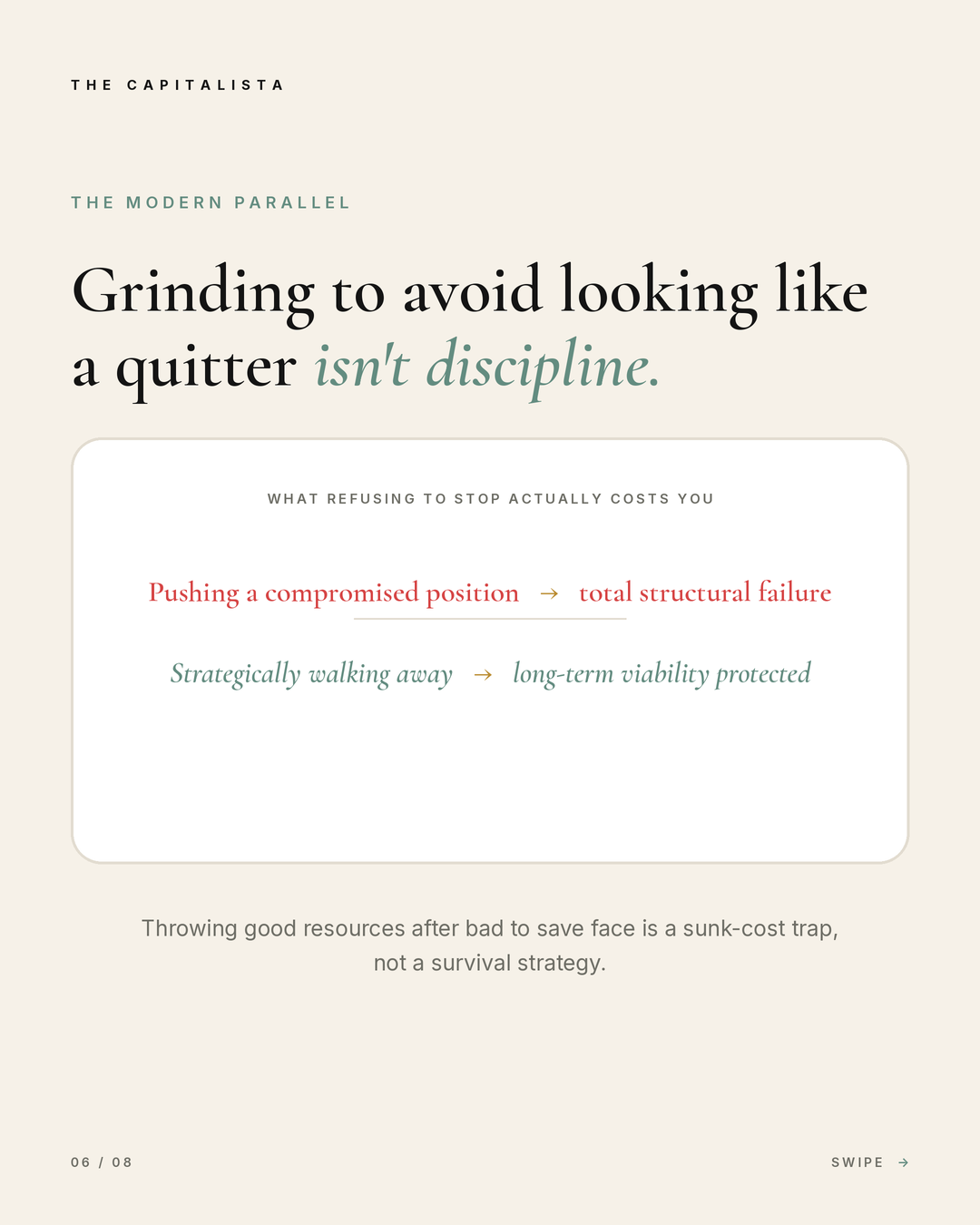
There's a specific, well-documented failure pattern this connects to directly: the sunk cost fallacy, continuing to invest time, money, or effort into a failing position specifically because of what's already been invested, rather than because of what continuing is actually likely to produce.
The trap is intuitive but backwards. The logic usually sounds like: "we've already put so much into this, we can't stop now." But the resources already spent are gone regardless of what you decide next. The only question that should actually drive the decision is forward-looking: given where things stand right now, is continuing to invest the best use of the resources you have left? Sunk costs are, by definition, irrelevant to that question, no matter how much they weigh on the decision emotionally.
Biles' choice illustrates the healthy version of this calculation. Years of training, an entire Olympic cycle, and a nation's expectations were all, in a sense, "sunk" into that moment. None of that changed the forward-looking calculation: continuing to compete while experiencing the twisties carried real, serious risk, and no amount of prior investment changed that math.
How to Apply This to Your Own Decisions
1. Separate the fear of looking like a quitter from the actual risk assessment
Before deciding whether to continue with a compromised project, commitment, or hire, explicitly write down two things separately: what you're afraid people will think if you stop, and what the actual, forward-looking risk and expected value of continuing looks like. These get emotionally tangled together by default. Untangling them on paper is often enough to see the decision more clearly.
2. Audit your current commitments for sunk-cost grinding
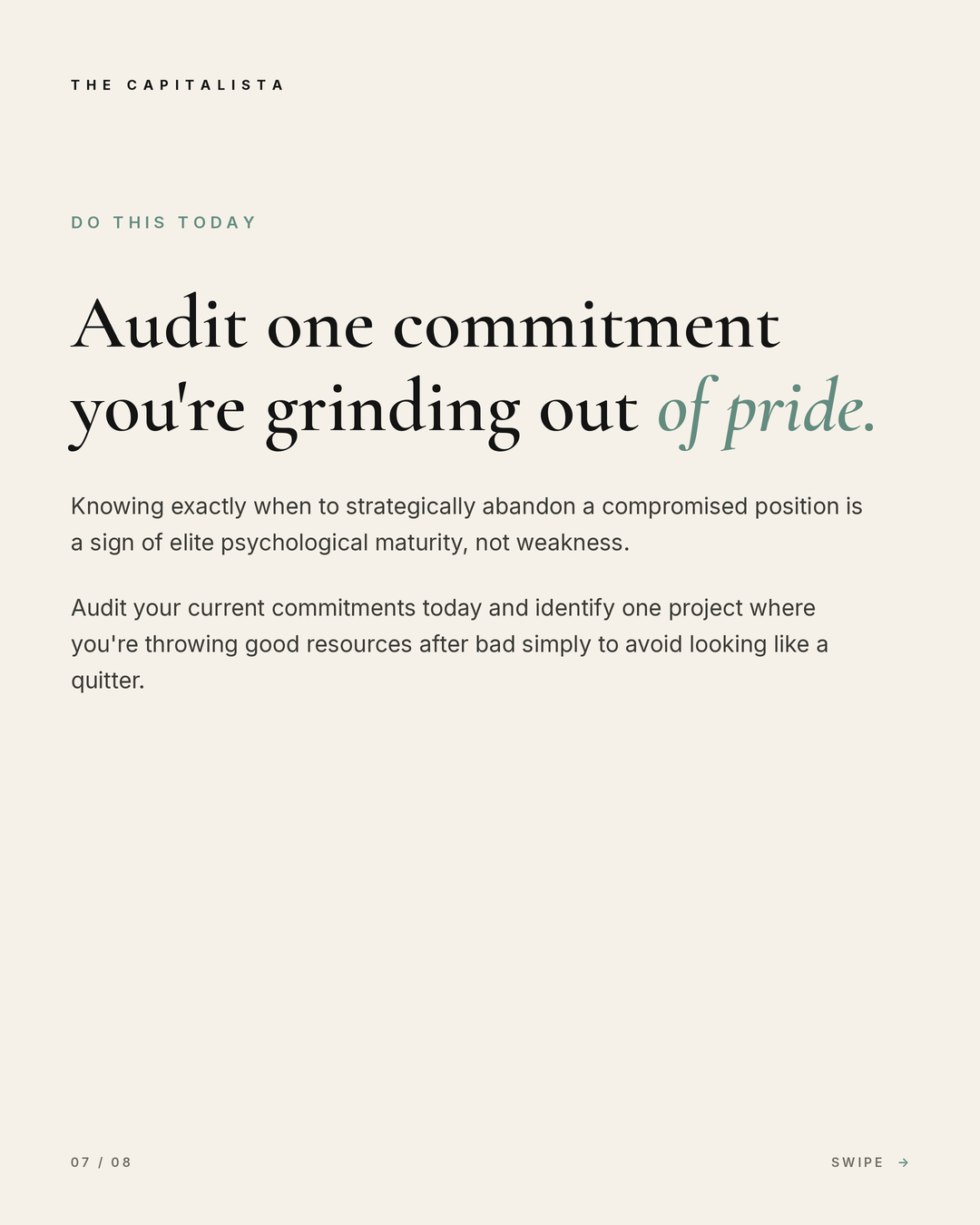
Look across your active projects, hires, and strategic bets right now, and identify the ones you're maintaining primarily because stopping would feel like admitting failure, not because the forward-looking numbers still make sense. Most operators, if they're honest, can find at least one immediately.
3. Define what "regaining spatial awareness" looks like before you return
Strategic withdrawal isn't permanent abandonment. Biles returned once the underlying problem was addressed enough to compete safely. Define, in advance, what conditions would need to change for you to re-engage with something you've paused, so the decision to return is as clear-eyed as the decision to stop was.
4. Build a culture where stopping isn't punished
If withdrawing from a compromised position gets treated internally as a personal failure rather than good judgment, your team will learn to hide problems and keep pushing bad positions long after the smart move was to stop. The leaders who make strategic withdrawal easier for their teams get told about problems earlier, when they're still cheap to fix.
5. Evaluate the decision by outcome quality, not by whether it "felt" like perseverance
The goal was never perseverance for its own sake. The goal was the best outcome available. Sometimes that's continuing. Sometimes, as Biles demonstrated, it's stopping, reassessing, and coming back on your own terms. Judge the decision by whether it protected the underlying asset, not by how much willpower it appeared to display.
What The Capitalista Does
Founders throw good money after bad constantly, not because the numbers support it, but because stopping feels like admitting the original bet was wrong. That emotional calculation, not the financial one, is usually what keeps a failing initiative alive long after it should have been paused.
The Capitalista is a fractional CFO service that helps you see a compromised position clearly, with the numbers instead of the ego driving the decision. We:
- Build the forward-looking financial case for continuing or stopping a project, stripped of the sunk costs that shouldn't be driving the decision
- Identify which commitments are being sustained by pride rather than performance, before they compound into a larger structural problem
- Model what "coming back" looks like, so a strategic pause has clear, objective conditions for re-engagement rather than becoming a permanent, undiscussed retreat
- Create the financial visibility that lets you make this call before a crisis forces your hand
- Give you the outside, unemotional read that's hardest to generate honestly from inside your own decision
Biles didn't need a fractional CFO to tell her the twisties were dangerous. But most founders facing their own version of that moment don't have anywhere near that same clarity about what they're actually looking at, and that's exactly the gap this kind of outside financial judgment is built to close.
Frequently Asked Questions
What is the business lesson from Simone Biles withdrawing at the Tokyo Olympics?
The lesson is that strategically withdrawing from a compromised position, one where continuing carries real structural or safety risk, is a sign of elite judgment, not weakness. Knowing when to stop is a skill that protects long-term viability, distinct from simply quitting when things get difficult.
What's the difference between quitting and strategic withdrawal?
Quitting typically means abandoning something because it's become difficult or uncomfortable, without a clear assessment of the actual risk. Strategic withdrawal is a calculated decision to stop committing further resources to a position that has become genuinely compromised, often with a defined path to re-engage later, as Biles did when she returned for the balance beam final.
Why do people keep pushing a failing project instead of stopping?
Largely due to the sunk cost fallacy combined with a fear of being perceived as having failed. The resources already invested feel like they justify continuing, even though they're irrelevant to a forward-looking decision about whether continuing is actually the best use of what remains.
How do I know if I'm in a "twisties" moment in my business?
If continuing to push a project, hire, or strategy carries a real, structural risk, financial, reputational, or operational, and you're maintaining it primarily to avoid looking like you gave up rather than because the forward-looking numbers support it, that's a strong signal you're in exactly this kind of moment.
How do I build the discipline to stop without it feeling like failure?
Separate the emotional fear of appearing to quit from an honest, written-out risk assessment. Define in advance what conditions would justify re-engaging with something you've paused. And build a culture, personally and organizationally, where surfacing a compromised position early is rewarded rather than treated as a personal failure.
The Bottom Line
Simone Biles faced the kind of pressure most people will never fully understand: a global stage, a nation's expectations, and years of buildup, all converging on a single moment where her body was telling her something was structurally wrong. She stopped. Then she came back, on her own terms, and still walked away with a medal.
Unconditional perseverance is often just a shortcut to total structural failure. The businesses and careers that survive long-term aren't the ones that never stop. They're the ones led by people willing to recognize a compromised position honestly, and strategically abandon it before it costs them everything, rather than grinding forward simply to avoid looking like they gave up.
What's the project you're still grinding out of pride, not strategy? And what would it actually cost you to keep going?