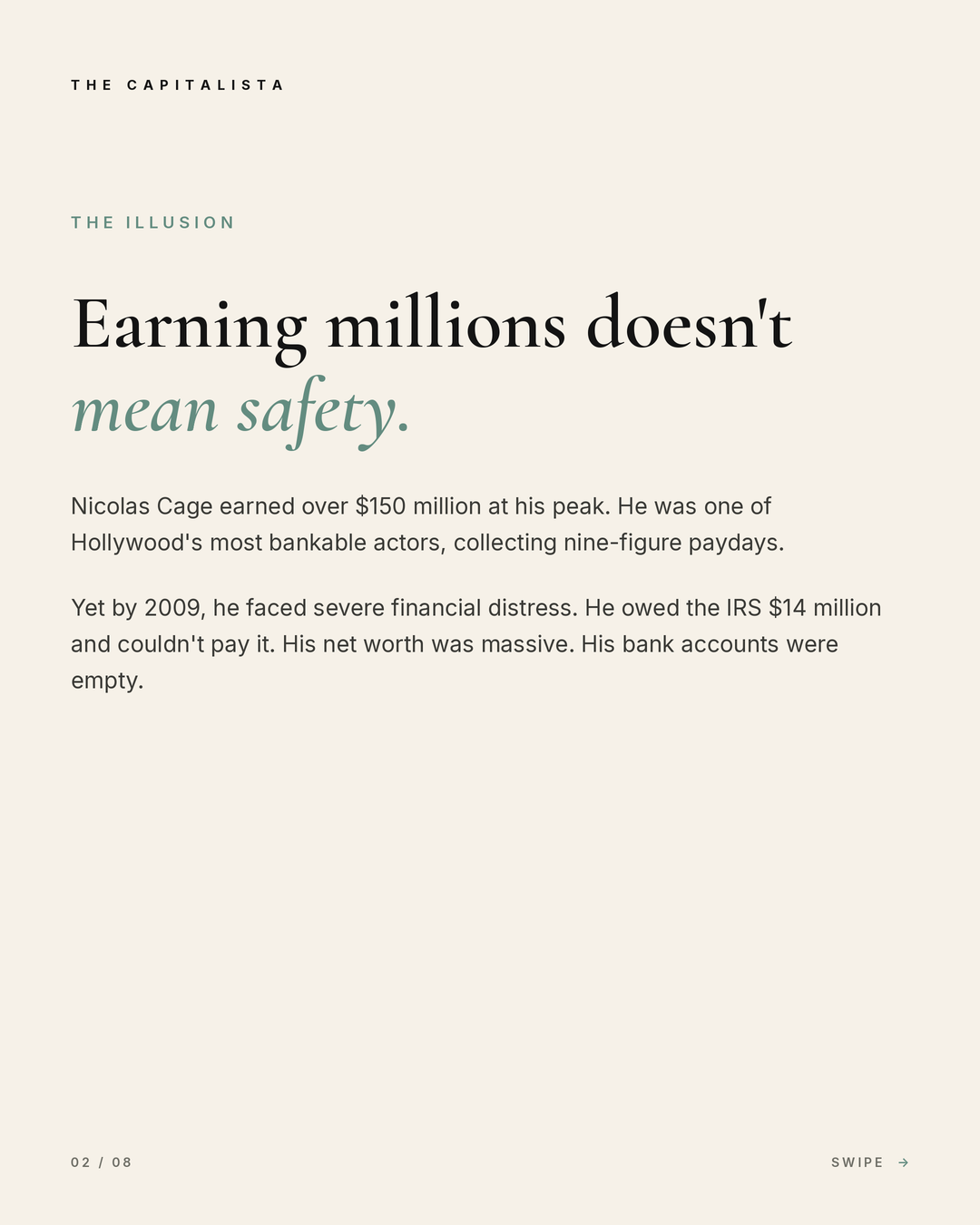
Nicolas Cage had everything. By the mid-2000s, he was one of Hollywood's most bankable actors. A string of box office hits. Nine-figure paydays.
Over $150 million earned across his career. By any measure, he was absurdly wealthy.
Then 2009 hit.
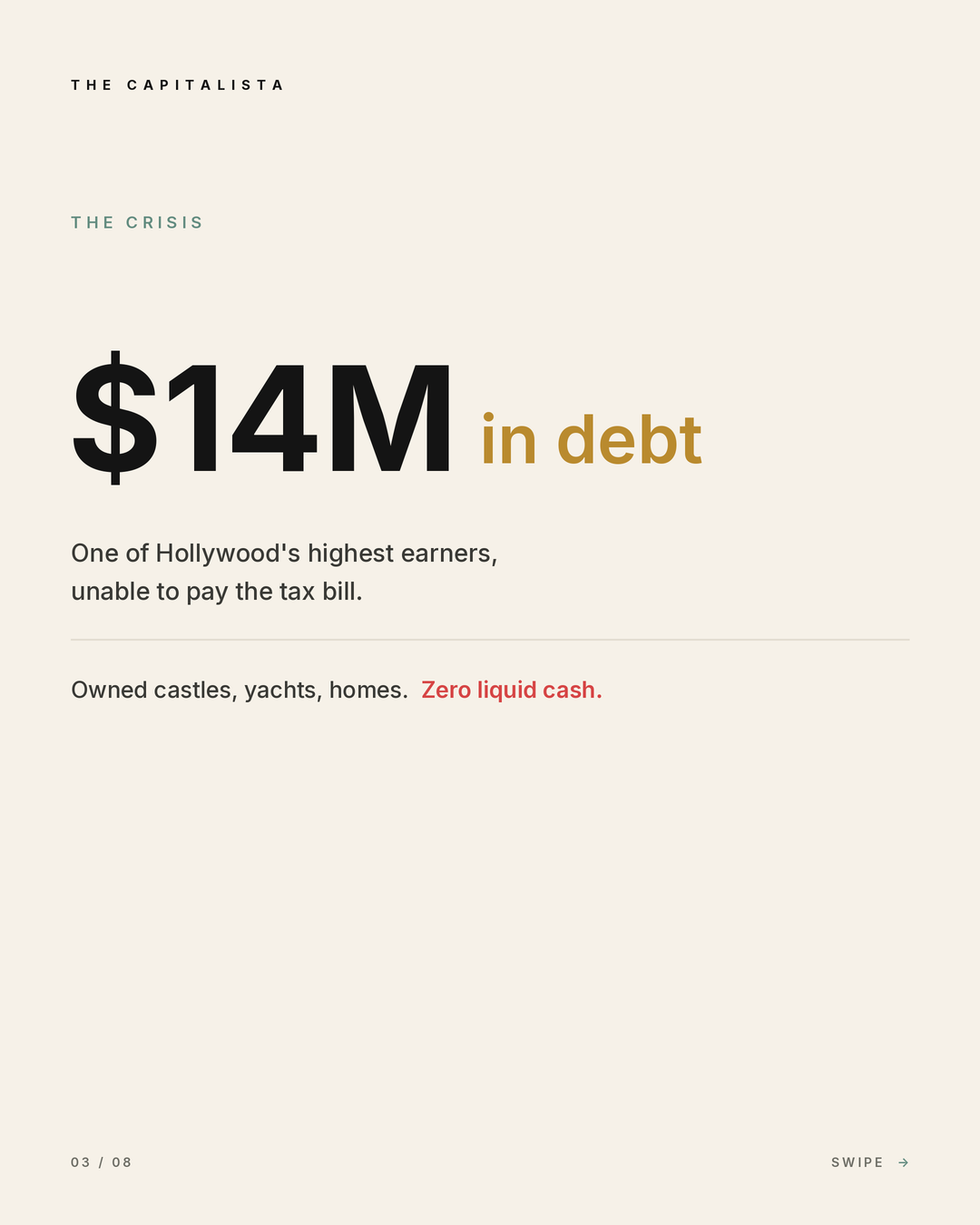
The IRS came calling. They wanted $14 million. Not over time. Not negotiable. Now.
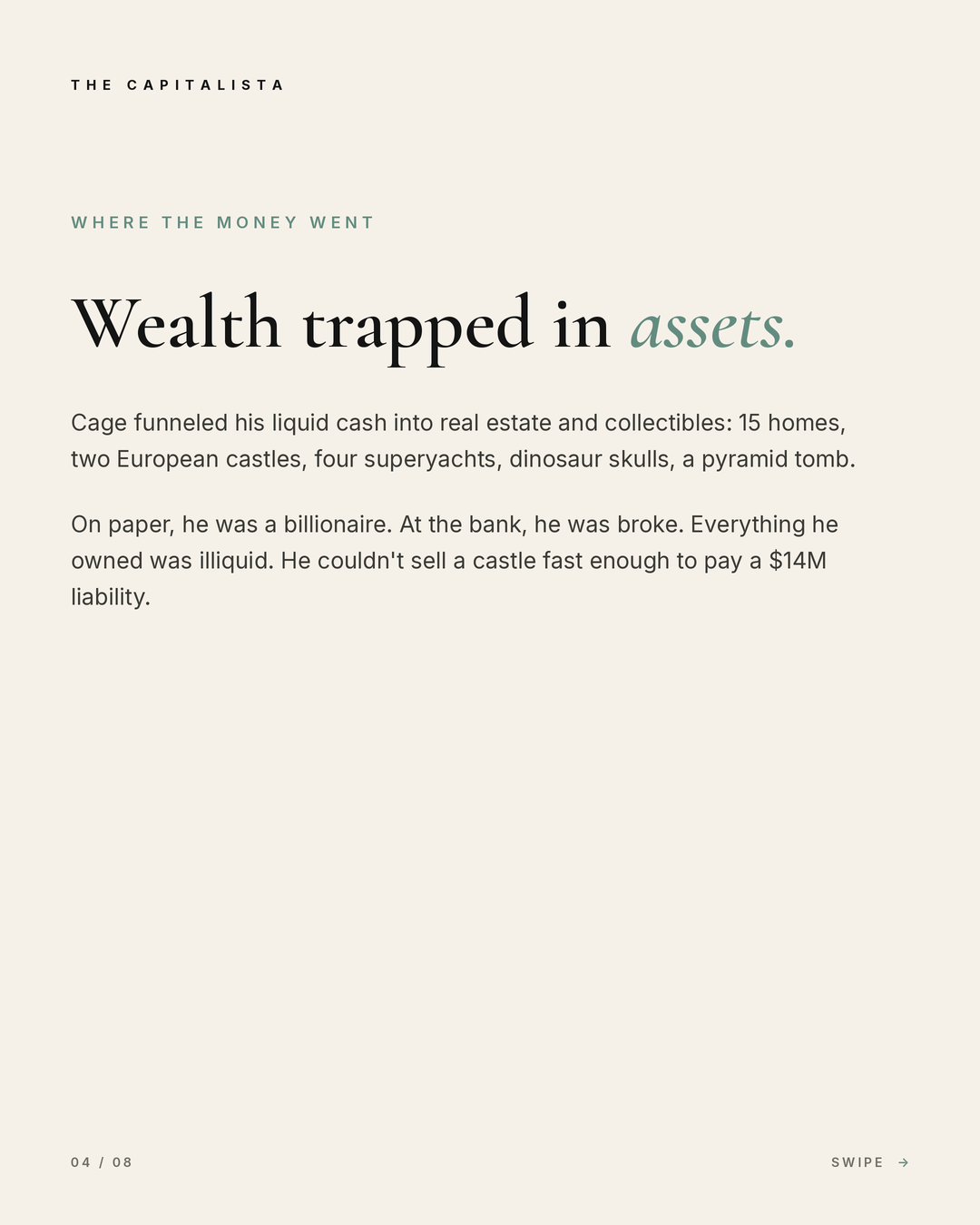
Cage couldn't pay it. Not because he was broke. Not because he'd gambled or lost everything. He couldn't pay it because every single dollar he had was tied up in things he couldn't quickly convert to cash: castles in Europe, homes scattered across the country, superyachts, and an extraordinary collection of rare art and antiquities.
On paper, he was worth hundreds of millions. In his bank account, there was almost nothing.
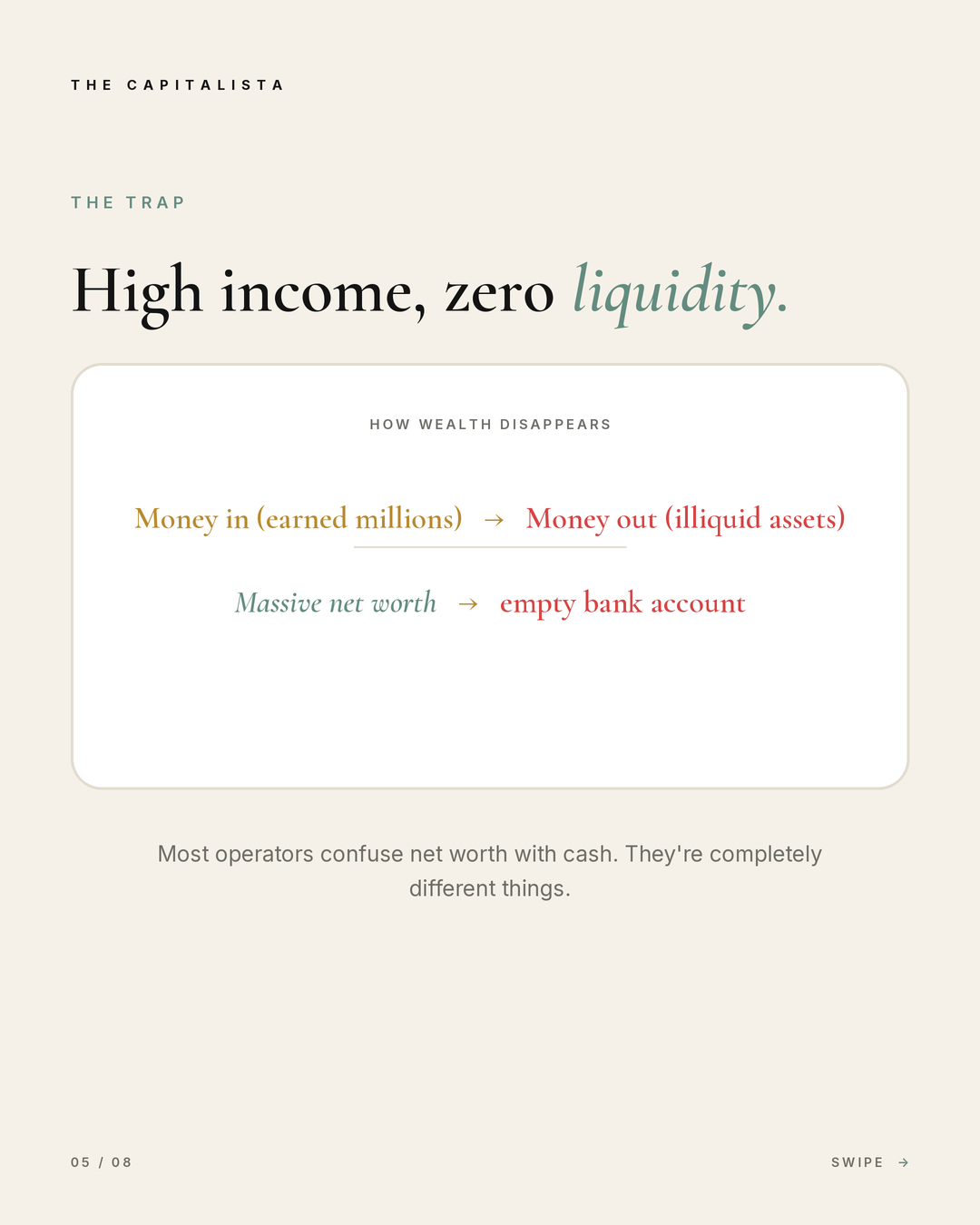
This story isn't about a celebrity's poor decisions. It's about a fundamental financial mistake that destroys businesses and fortunes every single day: confusing net worth with liquidity.
The Illusion of Wealth
Net worth looks like this: total assets minus total liabilities. It's the number on your financial statement. It's what Forbes publishes. It feels like real money.
Liquidity looks like this: cash in your bank account right now. It's what you have available to pay a bill today.
They are almost never the same thing.
Cage's net worth was legitimately massive. Real estate holdings across multiple continents. Yachts. Art. Collectibles. Tangible, valuable assets. On paper, the number was real.
But net worth is a theoretical number. It assumes all your assets could be sold at market price, instantly, with no transaction costs or delays. In the real world, it doesn't work that way.
Selling a castle takes months. Selling a yacht takes negotiation. Selling a rare art collection requires finding the right buyer at the right price. If you need $14 million today and all your wealth is in illiquid assets, you have a crisis.
That's exactly what happened to Cage.
Where the Money Went (And Why It Got Stuck There)
At his peak earning years, Cage was bringing in serious money. The kind of money that most people never see. But instead of keeping that money in liquid reserves, he systematically converted it into illiquid assets.
He bought 15 homes across various U.S. cities and properties abroad. Two European castles. Four superyachts, each one representing millions in capital. A world-class art collection. Rare dinosaur skulls for his personal collection. Vintage cars. Luxury items designed to appreciate but not to be quickly converted to cash.
This wasn't poor financial planning in the sense of reckless spending. These are intelligent acquisitions if you're thinking long-term about wealth accumulation. Real estate appreciates. Art appreciates. Yachts hold value.
But they're also capital-intensive, illiquid, and difficult to sell quickly.
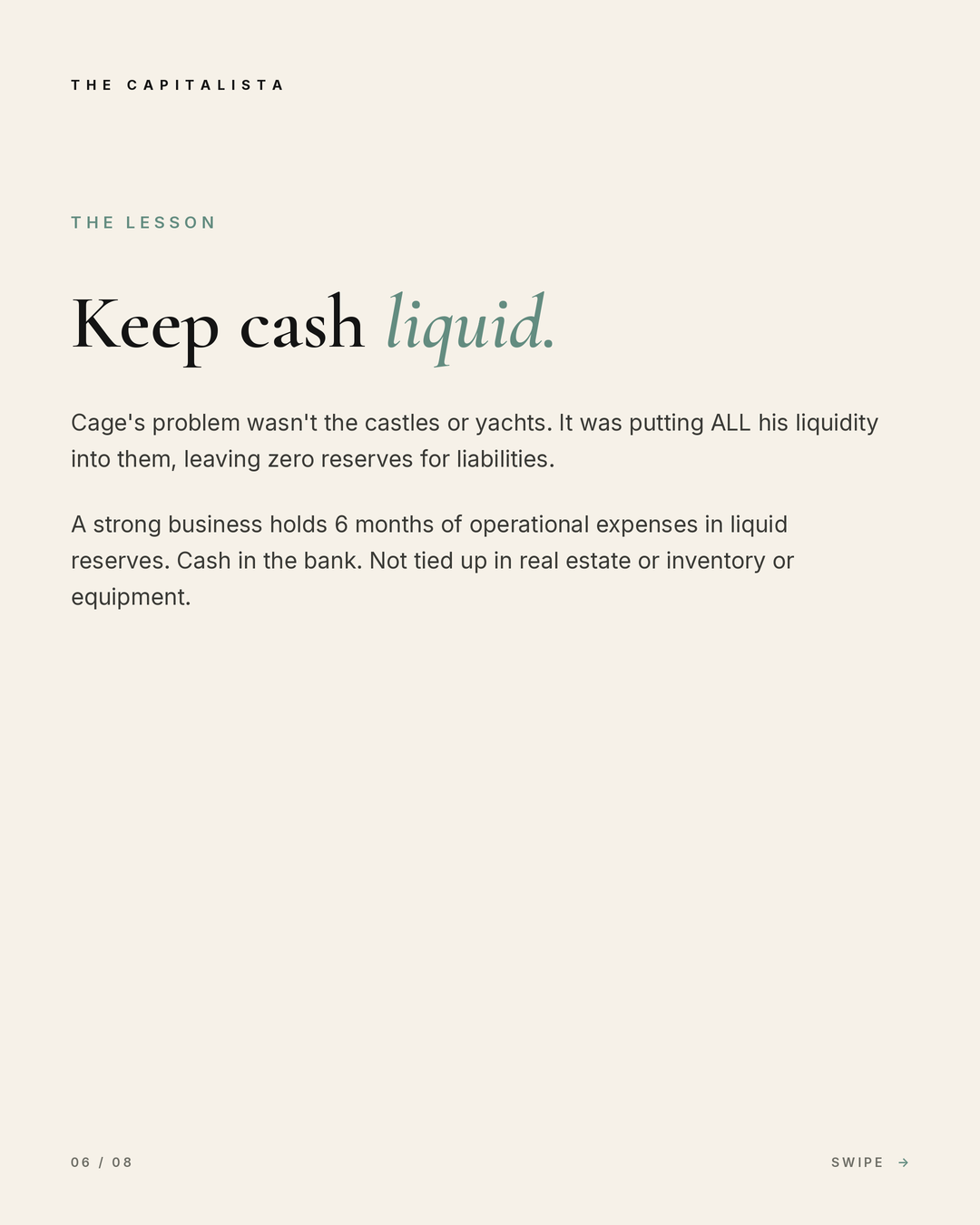
The problem was that Cage put almost everything into these assets, leaving minimal reserves in liquid, accessible cash. When a liability hit, he had no buffer.
The Cascading Problem
Once the IRS assessed the debt, Cage was in a bind. He couldn't simply liquidate a castle to pay the bill. He had to enter into a forced sale situation, which typically means:
- Selling assets below market value because buyers know you're desperate
- Taking months to months to complete sales while penalties and interest accrue
- Triggering tax consequences of liquidation
- Managing the logistics of divesting from multiple properties simultaneously
What should have been a manageable liability for someone with his net worth became a financial crisis because the wealth wasn't accessible.
Why This Happens in Businesses Too
Cage's situation is a cautionary tale that plays out in businesses constantly:
A founder builds a company worth $50 million. The company is successful. On paper, they're wealthy. But the wealth lives in the company equity, not in their personal bank account. Then a personal liability hits: a lawsuit, a tax assessment, a health emergency requiring expensive care.
They can't sell company equity instantly. They can't access the company's money without triggering tax consequences or losing control. They end up in financial distress despite being worth millions on paper.
A manufacturing business shows $100 million in revenue and $20 million in net assets. On paper, it looks solid. But all that capital is tied up in inventory, equipment, and real estate. When a supplier demands 30-day payment terms and a major customer's check is 90 days out, there's a cash flow crisis. The business is flush with assets but starving for cash.
A real estate investor buys a portfolio worth $50 million across ten properties. They're wealthy by net worth. But they're leveraged across mortgages, and if interest rates spike or a property loses value, they may face margin calls or refinancing crises. Their net worth is huge; their liquidity can be zero.
The Difference That Matters
Net worth is what you look like on paper.
Liquidity is what keeps you alive.
A strong business doesn't just measure net worth. It obsesses over liquidity. Specifically:
- Current assets (cash, receivables, inventory that can be converted to cash within a year)
- Working capital (current assets minus current liabilities)
- Cash reserves (months of operating expenses sitting in the bank)
These numbers tell you whether you can survive a crisis, pay an unexpected bill, or seize an opportunity.
Cage had a massive net worth but poor liquidity. Most businesses that fail have the same problem: they look rich on paper but can't cover their immediate obligations.
How to Audit Your Liquidity Right Now
Answer these three questions:
1. How much liquid cash do you have available today?
Not net worth. Not assets. Actual cash: in your bank account, available to you right now, with no restrictions.
2. How many months of operating expenses does that cash cover?
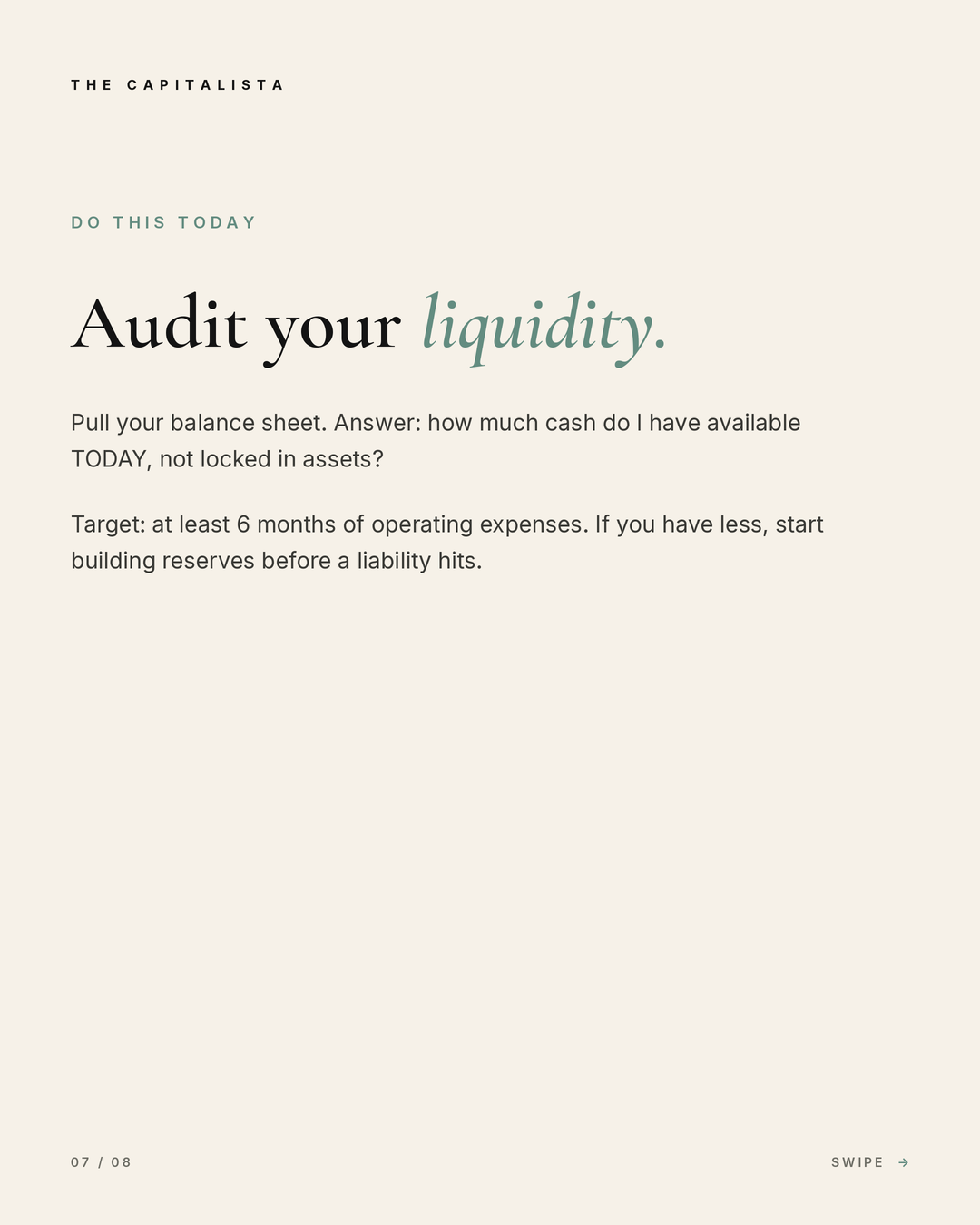
If your monthly burn rate (or operating expenses) is $100,000, and you have $500,000 in liquid cash, you have five months of runway. The benchmark: aim for at least six months.
3. What liabilities could hit you in the next 12 months?
Tax assessments. Lawsuits. Loan covenants. Payroll obligations. Debt maturity dates. Vendor payments. List them all. Add them up.
If your liquid cash doesn't cover your operational runway plus your foreseeable liabilities, you have a liquidity problem. Not a net worth problem. A liquidity problem.
What Cage Should Have Done (And What You Should Do)
The solution is straightforward but requires discipline:
- Keep a liquidity reserve equal to at least six months of operating expenses (or personal burn rate) in actual cash. This is non-negotiable.
- Before converting liquid cash into illiquid assets (real estate, equipment, inventory, art), run the math: do I have my reserves covered? Do I have foreseeable liabilities covered?
- Structure large acquisitions of illiquid assets with financing or partnerships so you're not converting your entire cash position.
- Understand the time it takes to convert your assets to cash. If you own real estate, how long would it take to sell? Months? A year? Plan accordingly.
- If you're building significant wealth, separate your personal liquidity reserves from your investment capital. The reserves are for liabilities and opportunities. The investment capital is for building assets.
Cage didn't do this. He converted available cash into castles and yachts without maintaining a liquidity buffer. When the IRS came calling, he had no choice but a forced sale at a bad time.
What The Capitalista Does
Net worth and cash are not the same thing, and most operators don't realize the distinction until it's too late.
Capitalista is a fractional CFO service that builds liquidity discipline into your business. We:
- Audit your actual liquidity, not just your net worth. We know how much cash you have, how long it lasts, and what gaps exist.
- Map your foreseeable liabilities, so you're never surprised by a big bill you can't cover.
- Build a reserve strategy, so you have enough liquid cash to survive a crisis without fire-selling assets.
- Structure your asset acquisitions, so you're building wealth without sacrificing liquidity.
- Monitor your working capital, so you catch cash crunches before they become crises.
Nicolas Cage's problem wasn't that he bought castles and yachts. It was that he didn't reserve enough liquid cash to handle a $14 million liability. The moment the IRS assessed the debt, he was in a forced liquidation.
Most businesses are in the same situation: they look rich on paper and broke in real time.
Frequently Asked Questions
What's the difference between net worth and liquidity?
Net worth is the total value of your assets minus your liabilities (on paper). Liquidity is how much cash you have available to spend right now. You can be worth millions and have zero liquidity if all your wealth is in illiquid assets.
Why couldn't Nicolas Cage just sell a castle to pay the IRS?
He could have, but selling a castle takes time: months of marketing, negotiations with buyers, closing costs, legal processes. The IRS wasn't willing to wait. Forced sales also happen at worse terms than planned sales because buyers know the seller is desperate.
How much liquidity is enough?
The benchmark is six months of operating expenses (for a business) or six months of burn rate (for an individual or startup). This gives you a buffer for unexpected liabilities or cash flow gaps.
What counts as liquid cash?
Cash in a bank account. Money market funds. Receivables that convert to cash quickly. Things that don't count: real estate, equipment, inventory, art, illiquid investments.
Is it okay to invest in real estate or illiquid assets?
Yes, absolutely. But only after you've established your liquidity reserves. Build your six-month cash buffer first. Then, invest the excess. Never invest from your emergency reserves.
What if my business is growing fast and I need to reinvest everything?
Even fast-growing businesses need liquidity buffers. The math is simple: if you grow too fast and outpace your cash, you can run out of money despite being profitable. Profitable businesses fail from cash shortages all the time.
The Bottom Line
Nicolas Cage was one of the highest-earning actors in Hollywood. His net worth was massive and real. But when the IRS demanded $14 million, none of that paper wealth mattered.
He had to sell assets at fire-sale prices to cover the bill because he hadn't maintained liquid reserves. His wealth was real; his cash position was not.
The lesson isn't "don't buy castles." The lesson is "don't convert all your liquid cash into illiquid assets."
Most businesses and individuals do exactly that. They build net worth while destroying liquidity. They look rich on paper and panic the moment a liability hits.
The operators who actually survive crises and build sustainable wealth are the ones who obsess over liquidity first, then build assets on top of it.
How much liquid cash do you have available today? What liabilities could hit you in the next 12 months? If the second number is larger than the first, you have a problem.
Start fixing it now, before the IRS comes calling.