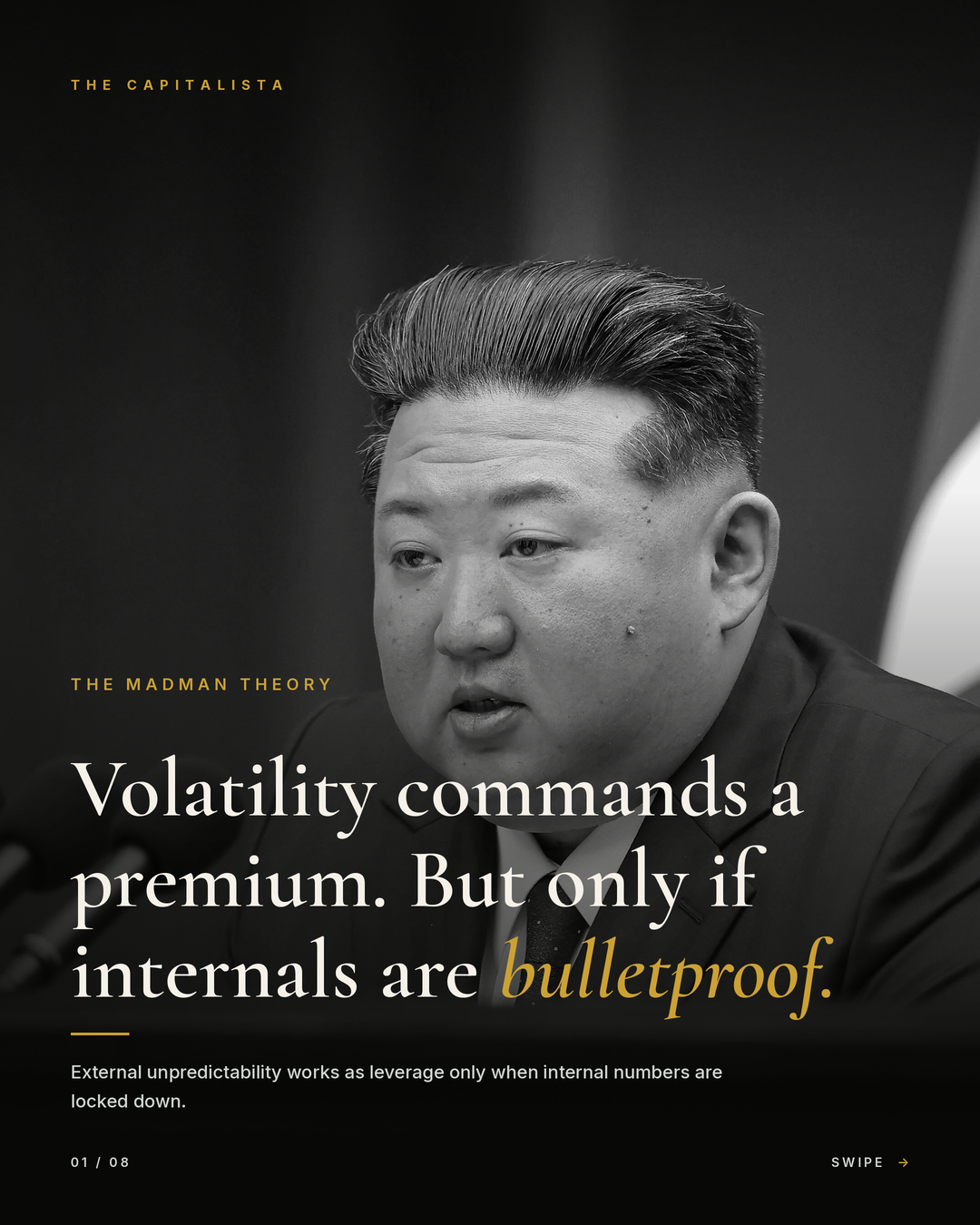
Kim Jong Un runs one of the smallest, most resource-constrained nations on earth, and yet he consistently extracts massive concessions from the largest superpowers on the planet.
Aid packages. Sanctions relief. Diplomatic attention far beyond what North Korea's economic weight would suggest.
He does it using a single, well-documented strategy: the Madman Theory. He projects calculated unpredictability and controlled irrationality, making it impossible for adversaries to reliably predict his next move. Faced with that uncertainty, more powerful nations consistently overcompensate. They pay a risk premium just to avoid the downside of guessing wrong.
It's a masterclass in negotiation leverage. It's also a strategy that gets badly misapplied by founders and operators who copy the surface behavior without understanding the foundation underneath it.
The Surface-Level Lesson (And Why It's Incomplete)
The obvious takeaway from the Madman Theory is simple: be unpredictable, and you gain leverage. Keep your competitors guessing. Don't telegraph your next move. Make yourself hard to model, and the market will price in a premium to deal with you.
This is a real phenomenon. Negotiators who are perceived as willing to walk away, or willing to take unconventional action, do extract better terms. Predictable counterparties get out-negotiated. Unpredictable ones command respect, or at least caution.
But there's a critical piece missing from the surface-level takeaway, and it's the piece that determines whether this strategy builds an empire or destroys a business.
What Kim Jong Un Actually Does Internally
Here's what gets lost in the "be unpredictable" narrative: Kim Jong Un is not unpredictable to himself.
He knows exactly what his country can afford. He knows exactly what military assets are available, what economic reserves exist, what the actual cost of any provocative action will be. The chaos and volatility he projects outward is a calculated performance built on top of complete internal clarity.
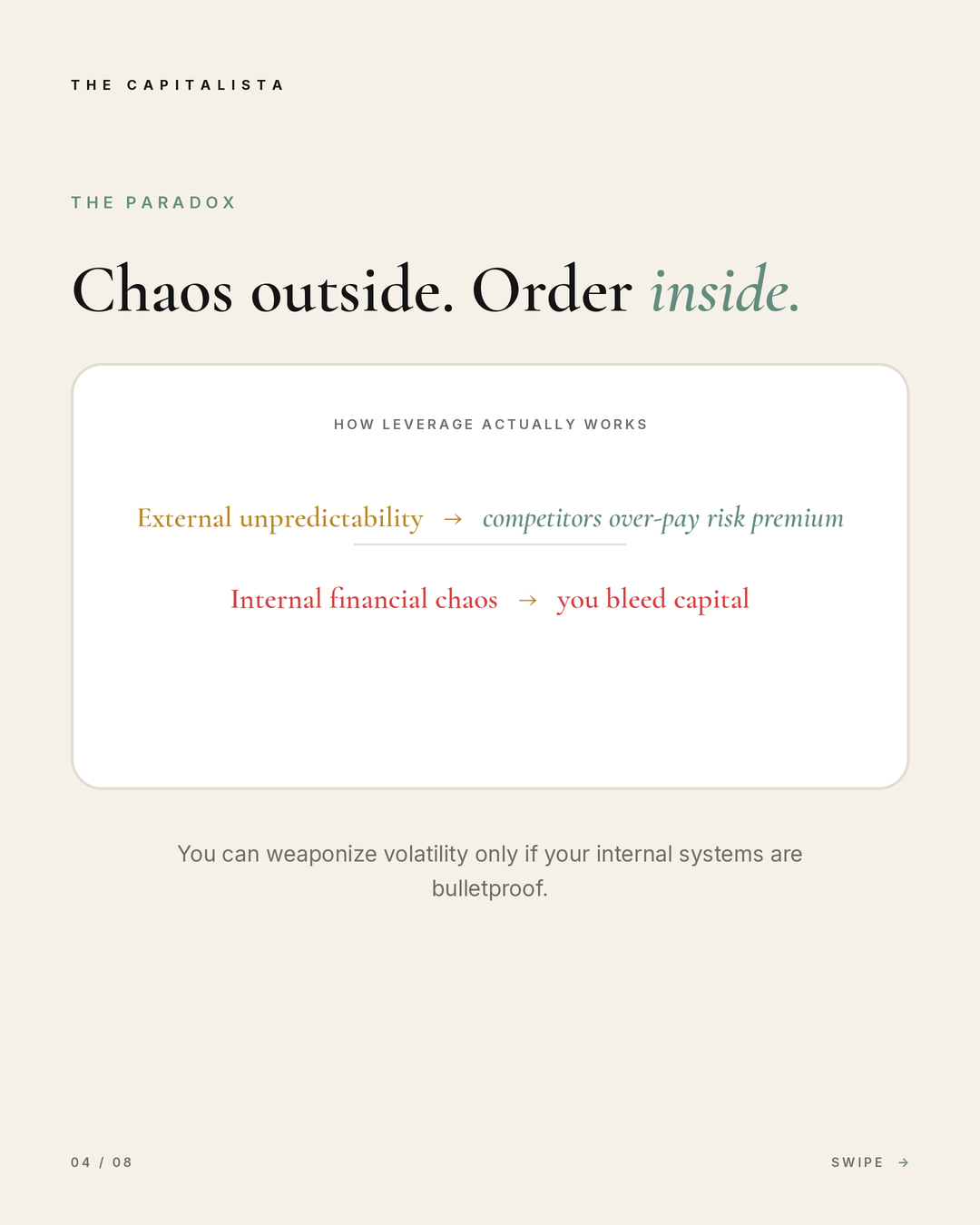
This is the entire mechanism that makes the Madman Theory work. External unpredictability creates leverage because it forces the other side to hedge against outcomes they can't model. But that leverage is only sustainable if the person deploying it knows precisely what they can afford to risk. Without that internal clarity, "unpredictability" isn't a strategy. It's just recklessness that eventually catches up with you.
Where Founders Get This Wrong
Founders and operators who try to copy this playbook often get the equation backwards. They focus entirely on the external unpredictability: aggressive pricing moves, sudden pivots, bold public statements, unconventional negotiating tactics. They believe the chaos itself is the source of leverage.
But if you ask these same founders what their actual cash position is, what their contribution margin is by product line, what their burn rate looks like over the next six months, many of them don't have a confident answer.
That's the trap. External unpredictability without internal financial clarity isn't leverage. It's just financial chaos with a confident story attached to it. And financial chaos doesn't intimidate competitors. It bankrupts you.
The Real Formula: Chaos Outside, Order Inside
The actual lesson from the Madman Theory isn't "be unpredictable." It's this: project calculated unpredictability externally, while maintaining complete, granular clarity internally.
This is a two-part discipline, and most operators only practice half of it.
Part one: external unpredictability as leverage. This means not telegraphing every move. Not negotiating from a position where the other side can perfectly model your bottom line. Being willing to walk away from deals that don't work. Making bold, unexpected moves when the internal math supports them.
Part two: internal financial certainty. This means knowing, with precision, your cash position at all times. Knowing your contribution margin by product, customer, and channel. Knowing your burn rate and runway. Knowing exactly what a given negotiating position or bold move will cost you if it doesn't pay off.
Without part two, part one is just gambling. With part two, part one becomes genuine strategic leverage.
Why Internal Financial Chaos Is So Dangerous
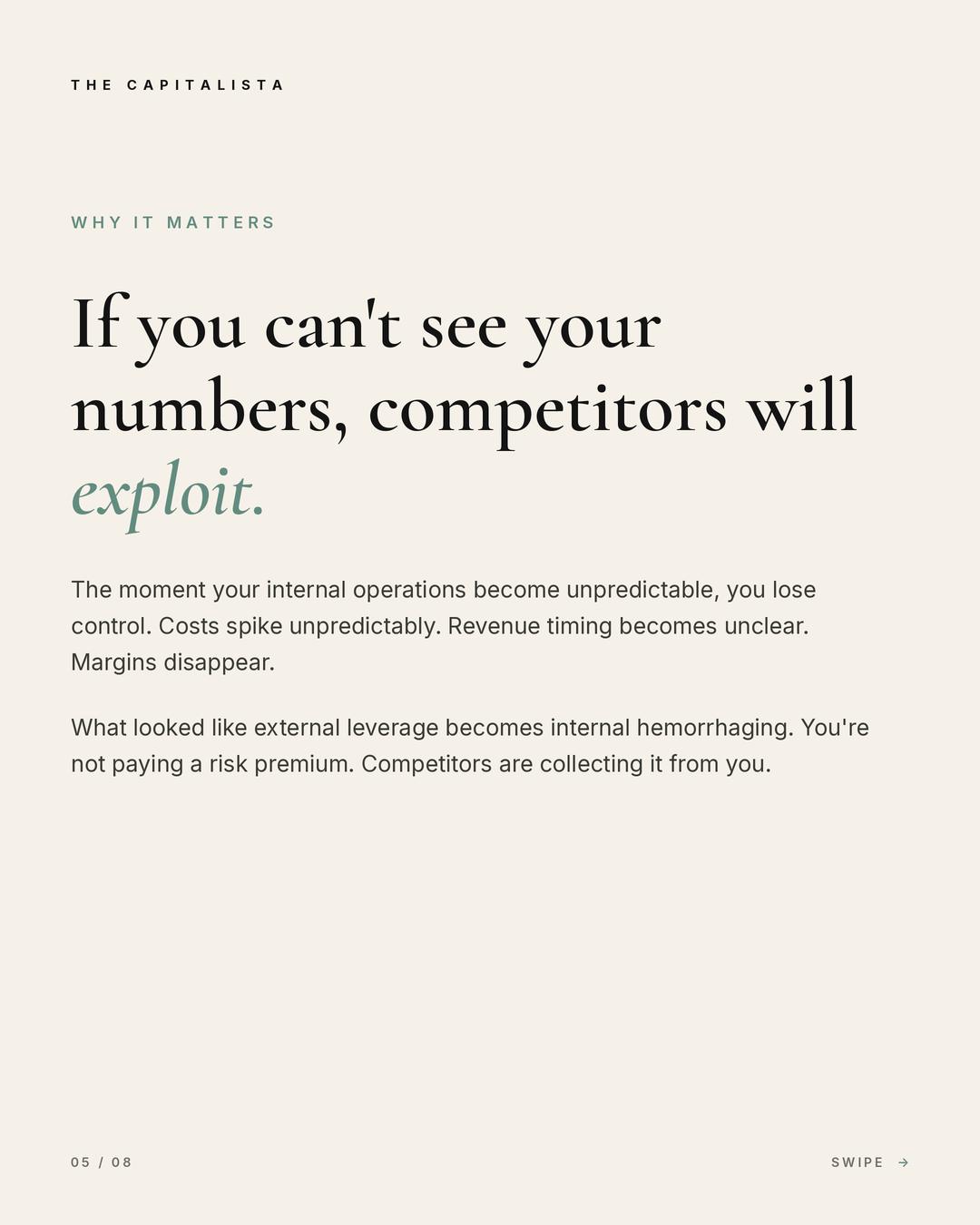
Here's the part that gets missed most often: the businesses that suffer most aren't the ones that are too predictable. They're the ones that are unpredictable internally, meaning their own leadership doesn't have clear visibility into their numbers.
When your cash flow is a mystery, you can't tell if a big bet is smart risk-taking or reckless gambling. When your margins by product or customer are unclear, you don't know which parts of your business are actually funding growth and which are quietly draining it. When your burn rate isn't precisely tracked, you don't know how much runway you actually have before a crisis hits.
This kind of internal chaos doesn't intimidate your competitors. It just means you're flying blind, and competitors who do have clear internal numbers will out-negotiate, out-price, and out-last you every time.
External unpredictability works because it makes you hard for others to model. Internal financial unpredictability just means you can't model yourself, which is far more dangerous.
How to Apply This Correctly
If you want to use unpredictability as genuine strategic leverage, without destroying your business in the process, the sequence matters:
1. Build complete financial visibility first
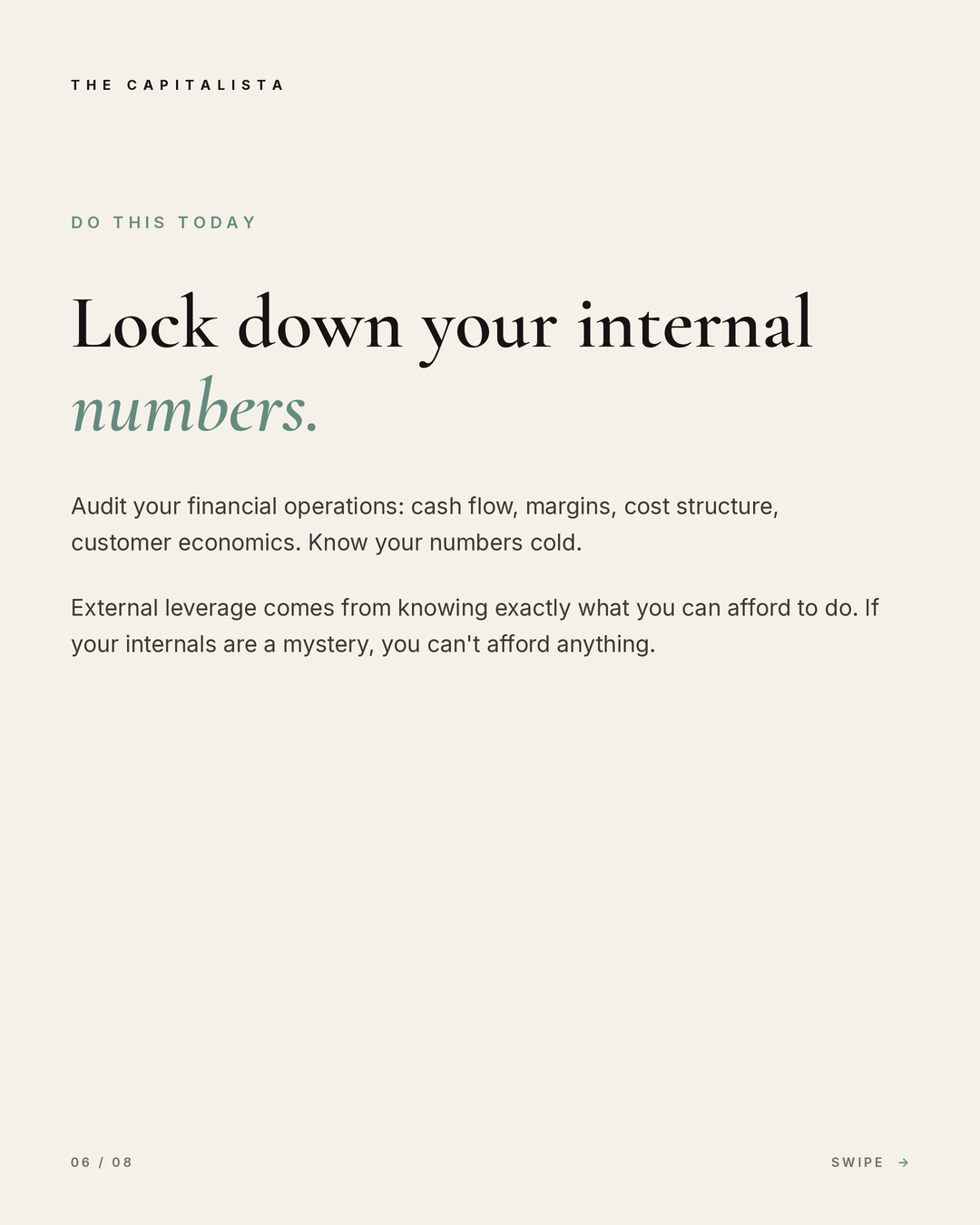
Before you make a single bold, unpredictable move in the market, get your internal numbers locked down. Cash position, updated in real time. Contribution margin by product, customer, and channel. Burn rate and runway, tracked monthly. Cost structure, fully mapped.
2. Know your walk-away number for every major decision
Before you negotiate aggressively, know precisely what the downside costs you if it goes wrong. This is what allows you to bluff credibly. Kim Jong Un can afford provocative moves because he knows the actual cost of every escalation. You need the same clarity before you make a bold move.
3. Deploy unpredictability deliberately, not reactively
Once your internal numbers are locked, you can strategically choose when to be unpredictable: an aggressive pricing move, an unconventional negotiation stance, a bold public pivot. These moves work because you know exactly what they cost you if they fail.
4. Never let internal operations become the source of your unpredictability
If your team, your customers, or your investors can't predict your cash position or financial stability, that's not leverage. That's a red flag. Internal predictability and stability are the foundation that makes external unpredictability sustainable.
The Cost of Getting This Backwards
Businesses that chase external unpredictability without internal financial discipline tend to follow a predictable pattern: early aggressive moves generate attention and short-term wins, but the lack of internal financial clarity means they can't sustain the strategy. Eventually, a cash crunch, a margin collapse, or a liquidity crisis forces a reckoning.
The businesses that survive and compound this strategy over time are the ones that build the internal discipline first. They know their numbers cold. Then, and only then, do they deploy calculated unpredictability as a genuine competitive weapon.
What The Capitalista Does
The Madman Theory works for Kim Jong Un because his internal numbers are locked down even while his external behavior looks chaotic. Most founders get this exactly backwards: chaotic internally, falsely confident externally.
Capitalista is a fractional CFO service that builds the internal financial certainty that makes real strategic leverage possible. We:
- Build real-time cash flow visibility, so you always know exactly what you can afford to risk
- Calculate contribution margin by product, customer, and channel, so you know precisely where your leverage actually comes from
- Track burn rate and runway, so bold moves are calculated risks, not blind bets
- Quantify the downside of every major strategic decision, so you can negotiate aggressively with real numbers behind you
- Turn financial chaos into financial clarity, so external unpredictability becomes an asset instead of a liability
You can be as unpredictable as you want to the market. But you should never be unpredictable to yourself.
Frequently Asked Questions
What is the Madman Theory?
The Madman Theory is a negotiation and geopolitical strategy where an actor projects calculated unpredictability or irrationality to force adversaries to overcompensate, extracting concessions they wouldn't otherwise make. It's associated with several historical leaders and is a documented tactic Kim Jong Un has used to extract aid and concessions from major powers.
Does unpredictability actually work as a business strategy?
It can work as a negotiation tactic when deployed deliberately and backed by real internal clarity about what you can afford to risk. It does not work as a substitute for financial discipline. Unpredictability without internal control is simply chaos.
Why is internal financial clarity so important for this strategy?
Because the entire mechanism of the Madman Theory relies on knowing precisely what you can afford before you make an unpredictable move. Without that clarity, you can't tell the difference between a calculated risk and a reckless bet, and the strategy stops being leverage and starts being gambling.
How do I know if my business has internal financial chaos?
If you can't answer, with confidence and precision, what your current cash position is, what your margin is by product or customer, and how many months of runway you have, you likely have internal financial chaos. These are the baseline numbers every operator should know cold.
What's the first step to building internal financial clarity?
Start with a full cash flow and margin audit. Understand exactly where your money comes from, where it goes, and what your true contribution margin looks like across every part of your business. This becomes the foundation for every strategic decision that follows.
The Bottom Line
Kim Jong Un's leverage doesn't come from chaos. It comes from complete internal clarity paired with calculated external unpredictability. He knows exactly what he can afford to risk, which is precisely what allows him to project volatility without ever actually losing control.
Most founders who try to copy this strategy skip the hard part. They chase the external unpredictability and skip the internal discipline that makes it sustainable. The result isn't leverage. It's chaos that eventually catches up with them.
If you want to use unpredictability as a genuine strategic weapon, start with the numbers. Know your cash position. Know your margins. Know your runway. Know exactly what every bold move costs you if it fails.
Then, and only then, go be unpredictable. Your competitors won't be able to model you. But you'll always be able to model yourself.