For decades, the most powerful royal families in Europe lined up to marry Queen Elizabeth I of England.
Kings, princes, and dukes offered alliances, armies, and empires. She turned down every single one.
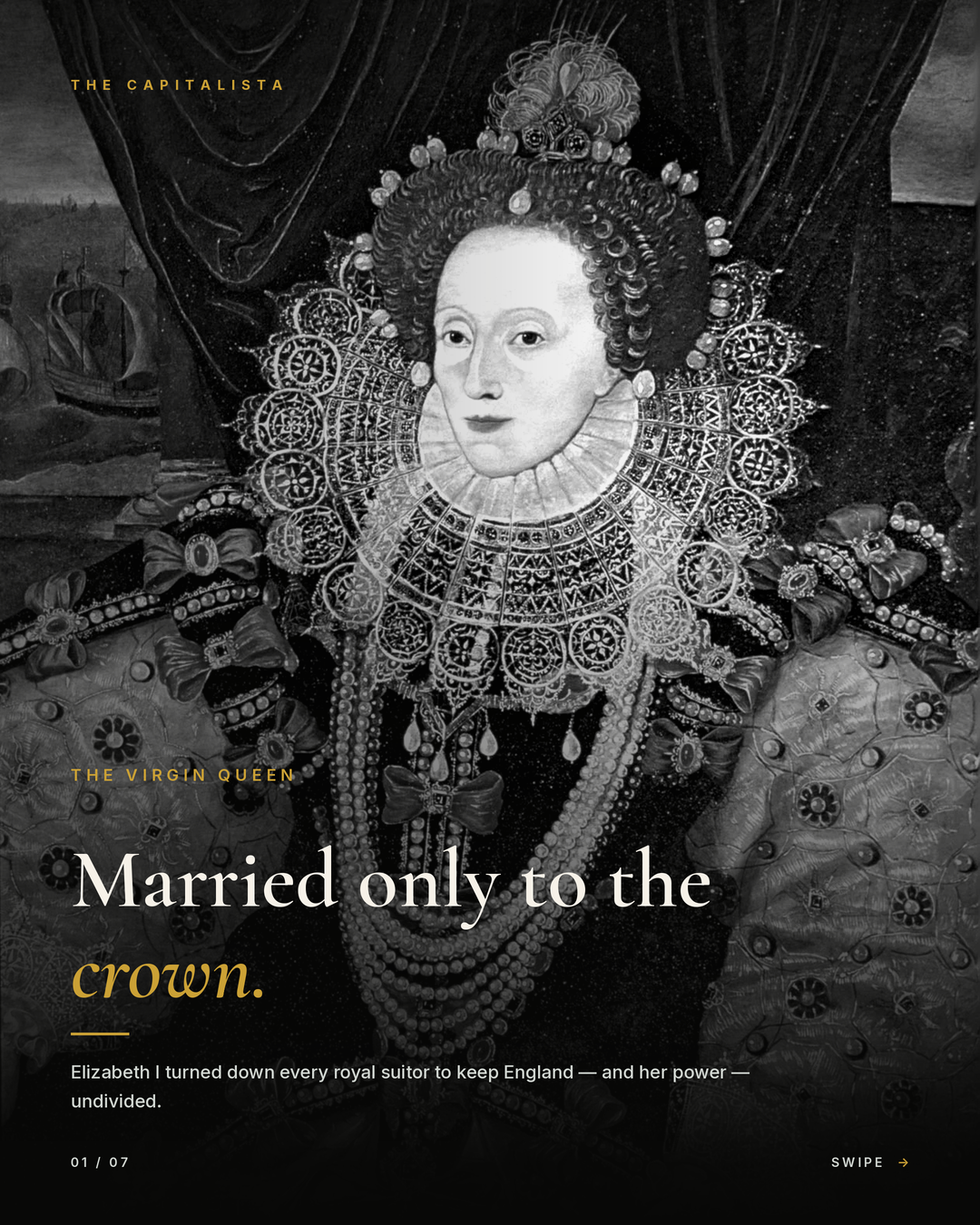
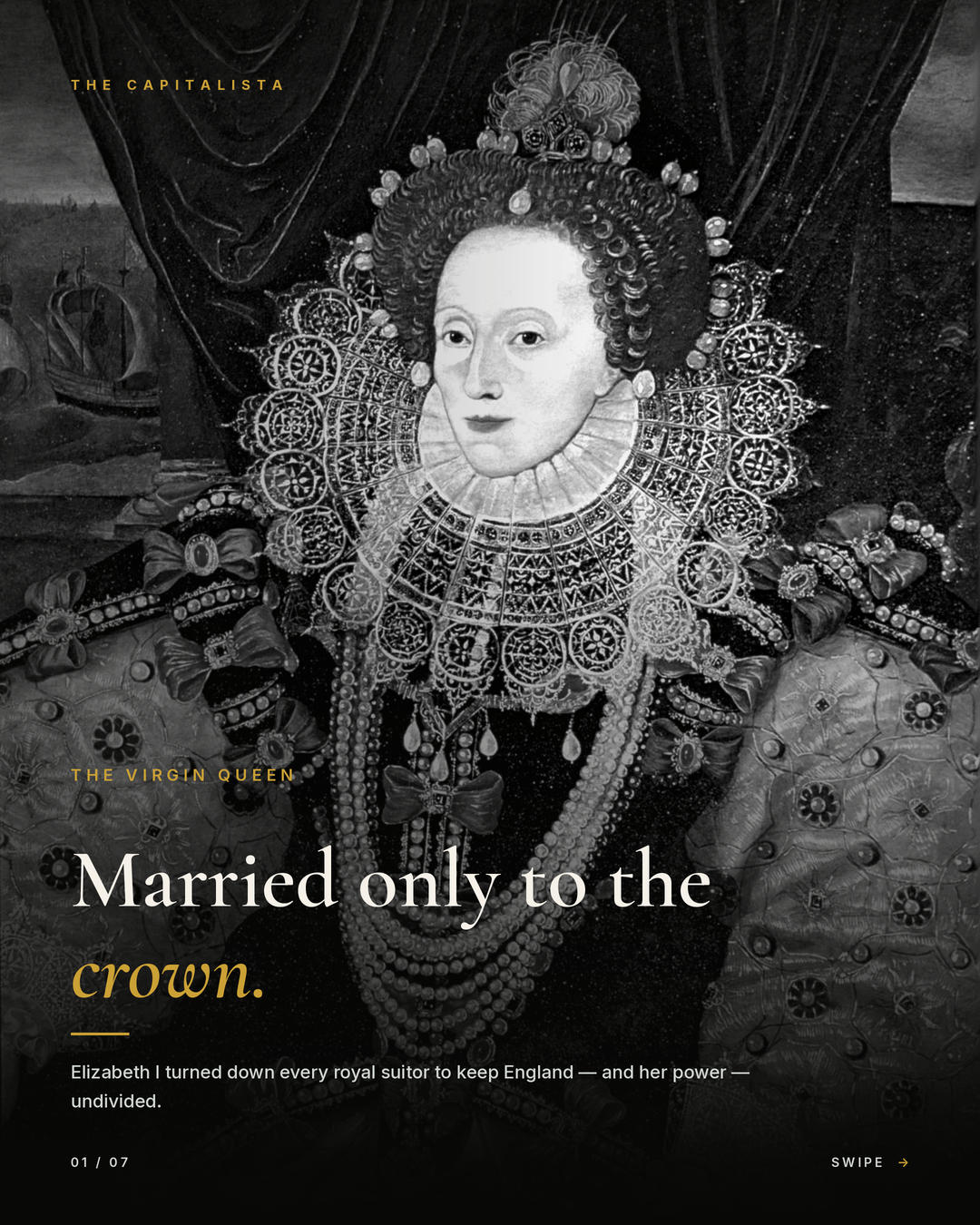
Instead, she declared herself the "Virgin Queen" married, she said, only to her kingdom. It looked like a personal sacrifice. It was actually one of the most disciplined strategic decisions in history, and it bought England a 44-year golden age.
This post answers the question people have asked for four centuries — why did Elizabeth I never marry? — and then draws out the lesson underneath it: that focus is a sovereign asset, and protecting it means saying no to a lot of very good offers.
Why Did Elizabeth I Never Marry?
Elizabeth's refusal wasn't indecision or bad luck. It was a calculated strategy to preserve her power. Several forces pushed her toward staying single, and she understood all of them.
Marriage meant surrendering control. In 16th-century England, the law gave a husband authority over his wife — including a queen. To marry was to hand a man influence over the throne. Elizabeth reportedly said, "I will have but one mistress here and no master." A husband was, by definition, a master she couldn't afford.
A foreign prince would compromise England's sovereignty. Marrying abroad risked turning England into a satellite of a bigger power, dragging the country into foreign wars and priorities. Elizabeth had watched exactly this happen to her half-sister Mary, whose marriage to Philip of Spain entangled England in Spanish interests and cost her popularity.
An English husband would trigger rivalry. Choosing a nobleman from within the court would have inflamed jealousy among the other powerful families — a fast route to faction and even civil war.
The personal stakes were brutal. Her father, Henry VIII, ran through six wives and executed two of them — including Elizabeth's own mother, Anne Boleyn, when Elizabeth was two. Childbirth in that era was genuinely life-threatening. Elizabeth knew her body was, in political terms, not entirely her own.
Add it up and marriage offered short-term security in exchange for permanent compromise. She refused the trade.
"Married to England": Branding the Sacrifice
What separates Elizabeth from someone who simply avoided a decision is what she did with the refusal. She didn't apologize for being single. She turned it into mythology.
When Parliament pressed her to marry in 1559, she gave one of the most famous answers in English history:
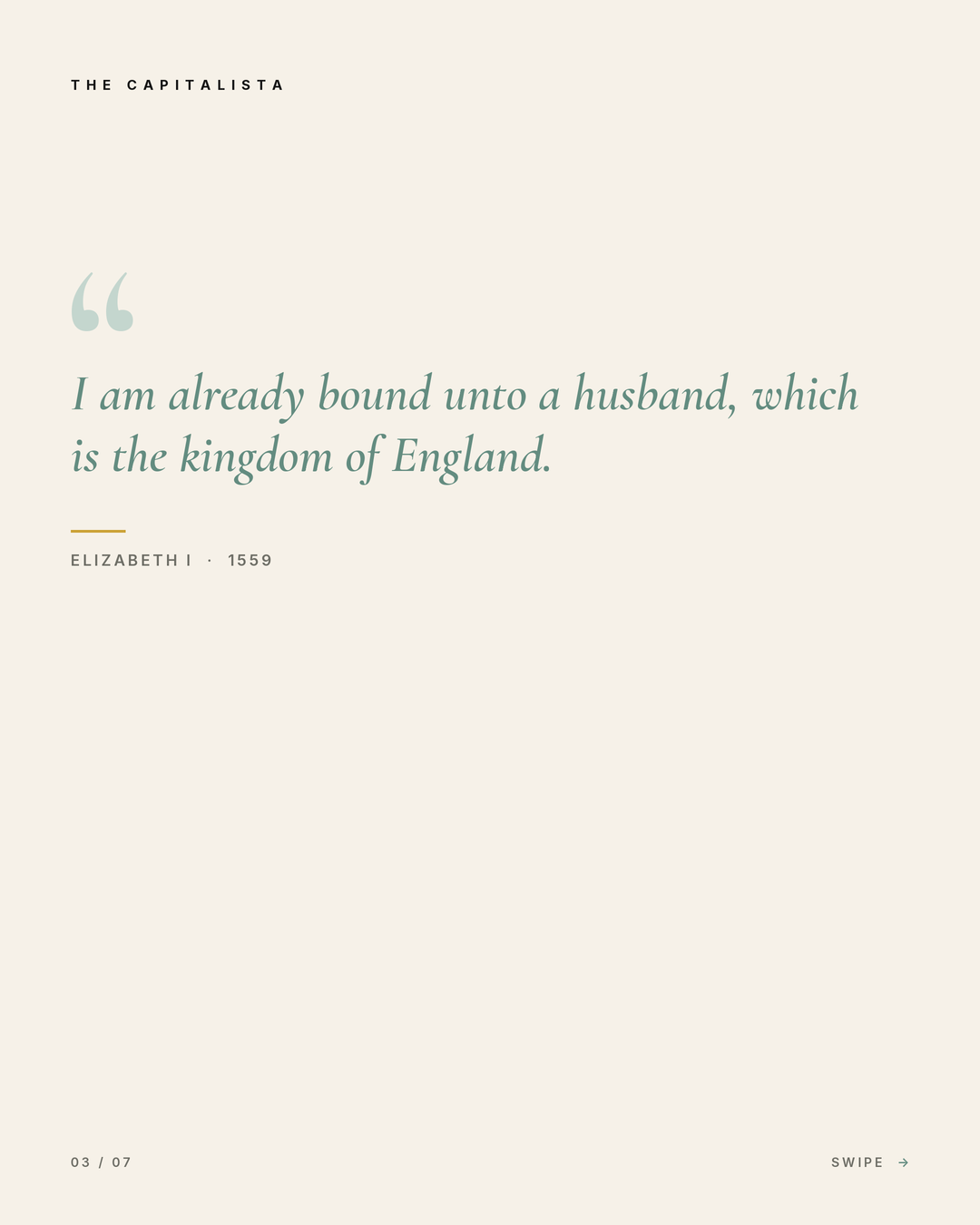
"I am already bound unto a husband, which is the kingdom of England."
She styled herself the Virgin Queen, symbolically wedded to her country. The sacrifice of a private life became the foundation of an untouchable public image — a monarch whose entire devotion belonged to her people. She took the one thing that looked like a weakness and made it the source of her authority.
What It Cost — and What It Bought
Make no mistake: the decision had a real price. Elizabeth gave up a conventional private life, an heir of her own body, and the ordinary comforts most people organize their lives around. Focus always costs something.
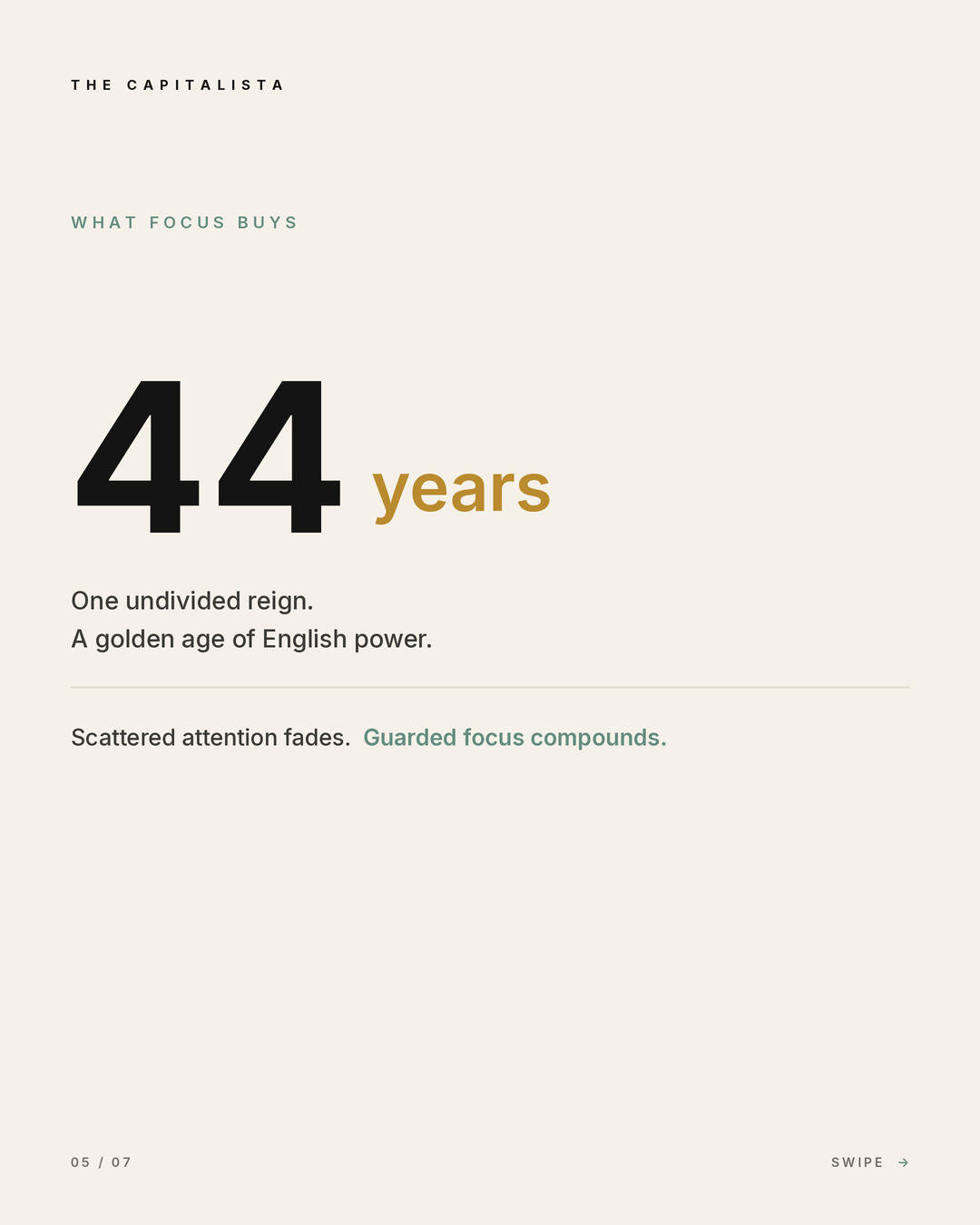
But look at what the sacrifice purchased: uncompromised sovereignty, a stable and independent England, the defeat of the Spanish Armada, a flourishing of art and exploration, and a 44-year reign now remembered as a golden age. By refusing to divide her crown, she kept all of its power pointed at a single objective.
That's the pattern worth stealing: she traded scattered, comfortable "good" options for one undivided great one.
The Business Lesson: Focus Is a Sovereign Asset
Here's where a Tudor queen becomes weirdly relevant to building a company.
Chasing short-term desires, seeking constant validation, and trying to please everyone will fracture your operational focus exactly the way a bad marriage would have fractured Elizabeth's crown. Every "yes" quietly hands away a piece of your sovereignty over your own time, priorities, and direction.
Empire-building — in business as in history — requires the willingness to make hard compromises. If you want an elite tier of results, you have to sacrifice short-term comforts and pass up "good" opportunities that don't serve your ultimate objective. Your focus is your most sacred asset. Guarded, it compounds. Scattered, it evaporates.
The hardest part isn't saying no to bad offers. Anyone can do that. It's saying no to good ones — the flattering project, the interesting partnership, the extra revenue stream — that would quietly divide your crown.
The Hidden Cost of Saying Yes
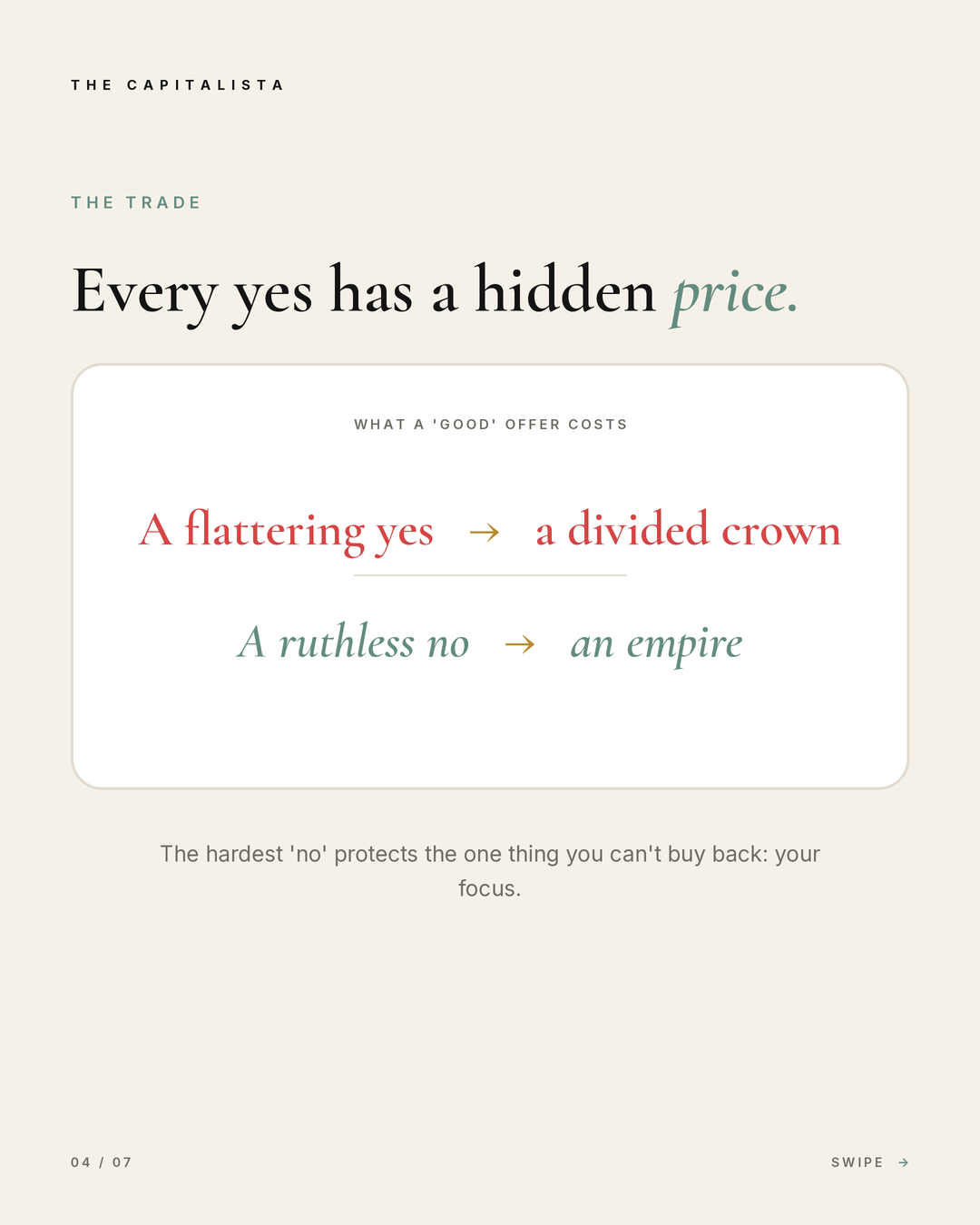
Every yes has a hidden price, and it's rarely the obvious one. The cost isn't just the hours the new commitment takes. It's the focus it pulls away from your single most important objective.
A "good" opportunity is more dangerous than a bad one, precisely because it's defensible. Bad opportunities are easy to decline. Good ones come wrapped in logic: it pays well, it's prestigious, it might lead somewhere. That's exactly how a crown gets divided — not by one catastrophic decision, but by a dozen reasonable ones.
Elizabeth's genius was recognizing that a good marriage was still a divided crown. The offer being attractive didn't make it safe.
How to Protect Your Focus Like a Monarch
You don't need a throne to rule your own attention. You need a border and the discipline to defend it. Here's a practical framework.
1. Define the one objective
You can't protect focus you haven't named. Decide the single outcome your business exists to achieve this year. Everything gets measured against it.
2. Audit your calendar for "divided crowns"
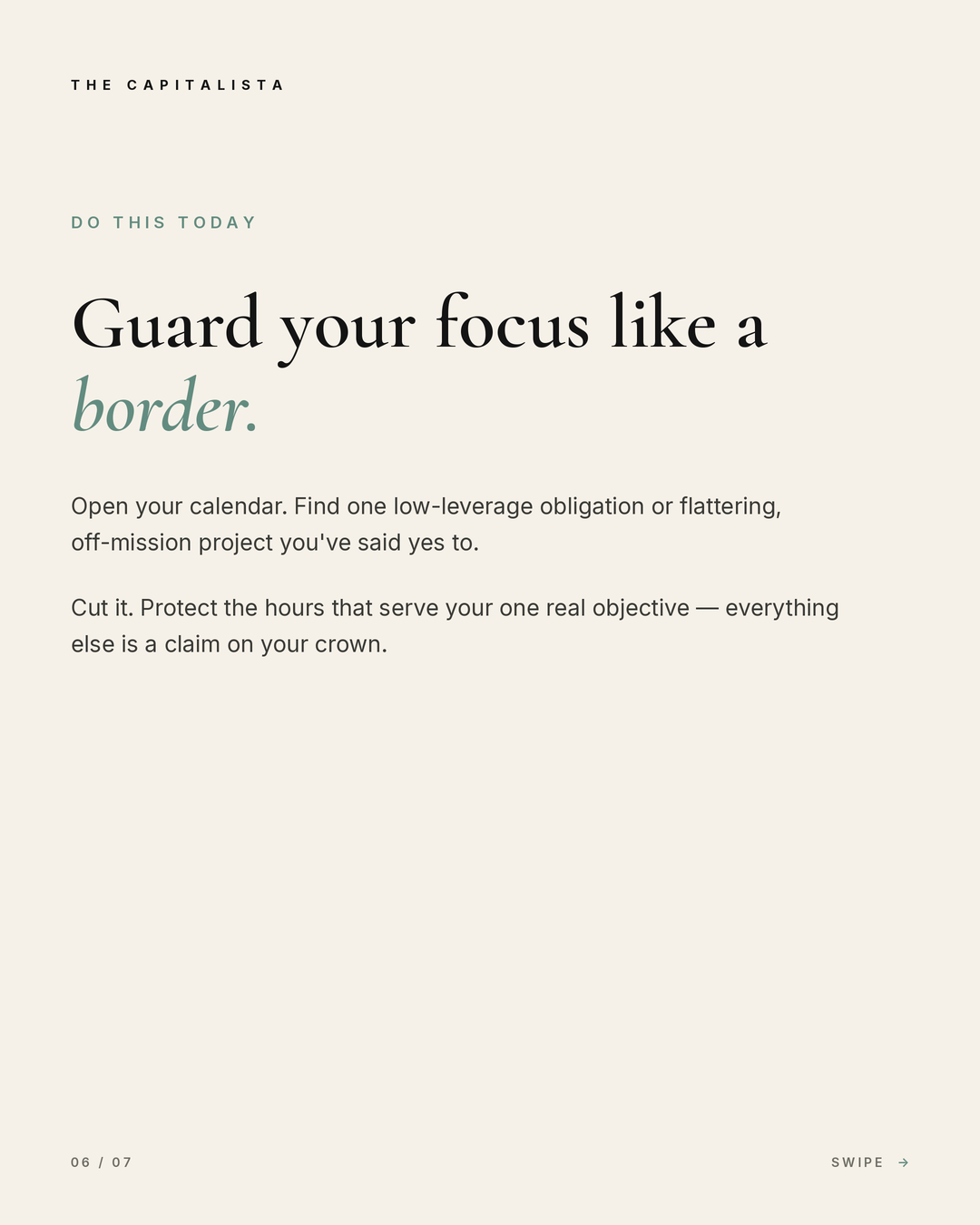
Open your schedule and find the low-leverage obligations and flattering, off-mission projects you've said yes to. These are the political marriages of your business — comfortable, defensible, and quietly compromising.
3. Cut one thing today
Don't wait for a grand reorganization. Identify one distraction pulling you from your primary goal and remove it. Ruthlessly. Then do it again next week.
4. Make your "no" a brand, not an apology
Elizabeth didn't hide her refusal — she built an identity on it. Position your focus as a feature: you go deep on one thing, which is exactly why you're the best at it. Discipline, made visible, becomes authority.
The Financial Version of Focus: What The Capitalista Does
There's one place where "protecting your focus" gets tested hardest, and it's the one founders most often get wrong: the money.
Most of the "good" opportunities that divide a business are financial — the low-margin client that pays but drains your team, the shiny revenue stream that scatters your delivery, the discount that fills the calendar but starves your profit. Saying no to those requires knowing, in hard numbers, what actually serves your objective and what only looks like it does.
That's what The Capitalista is built for. We're a fractional CFO service that gives founders the financial command to protect their focus like a sovereign. Concretely, we:
- Rebuild your business around one objective and the metrics that actually move it.
- Expose which revenue is worth keeping — the margins, the profitable clients, the offers that compound — and which "good" money is quietly capping your growth.
- Own your pricing, cash flow, and forecasting, so you can decline the wrong opportunities from a position of financial strength rather than fear.
- Translate the numbers into plain decisions: what to protect, what to cut, and where to point all of your undivided attention next.
A queen protected her crown by refusing the wrong marriages. A founder protects the business by refusing the wrong revenue. The Capitalista makes sure you can tell the difference.
Frequently Asked Questions
Why did Elizabeth I never marry?
To preserve her power. Marriage would have given a husband authority over the throne, and a foreign match risked England's sovereignty. Having watched her sister's marriage to Philip of Spain and her father's brutal marital history, Elizabeth chose to rule alone.
What does "the Virgin Queen" mean?
It's the image Elizabeth I cultivated of herself as unmarried and symbolically devoted to England. She declared she was "bound unto a husband, which is the kingdom of England," turning her single status into a source of authority.
Did Elizabeth I ever want to marry?
She entertained many suitors and was long linked to Robert Dudley, using marriage negotiations as a diplomatic tool. But she never went through with any match, ultimately prioritizing her independence and England's stability over any union.
Was Elizabeth I really a virgin?
"The Virgin Queen" was primarily a carefully managed political image. Historians debate her private life, but the historical fact is that she never married and built her authority on that unmarried, undivided status.
What was the Elizabethan golden age?
Elizabeth I's 44-year reign (1558–1603) is remembered as a high point of English power and culture — the defeat of the Spanish Armada, the flourishing of theatre and exploration — enabled in part by the stability of her undivided rule.
The Bottom Line
Queen Elizabeth I refused every crown-dividing offer Europe put in front of her, branded the sacrifice as devotion, and won nearly half a century of golden-age power. Her lesson is uncomfortable and permanent: focus is sovereignty, and protecting it means turning down good things, not just bad ones.
Look at your own calendar today. Find one flattering, off-mission commitment quietly dividing your crown — and cut it. Guard your focus like a queen guarded her throne.