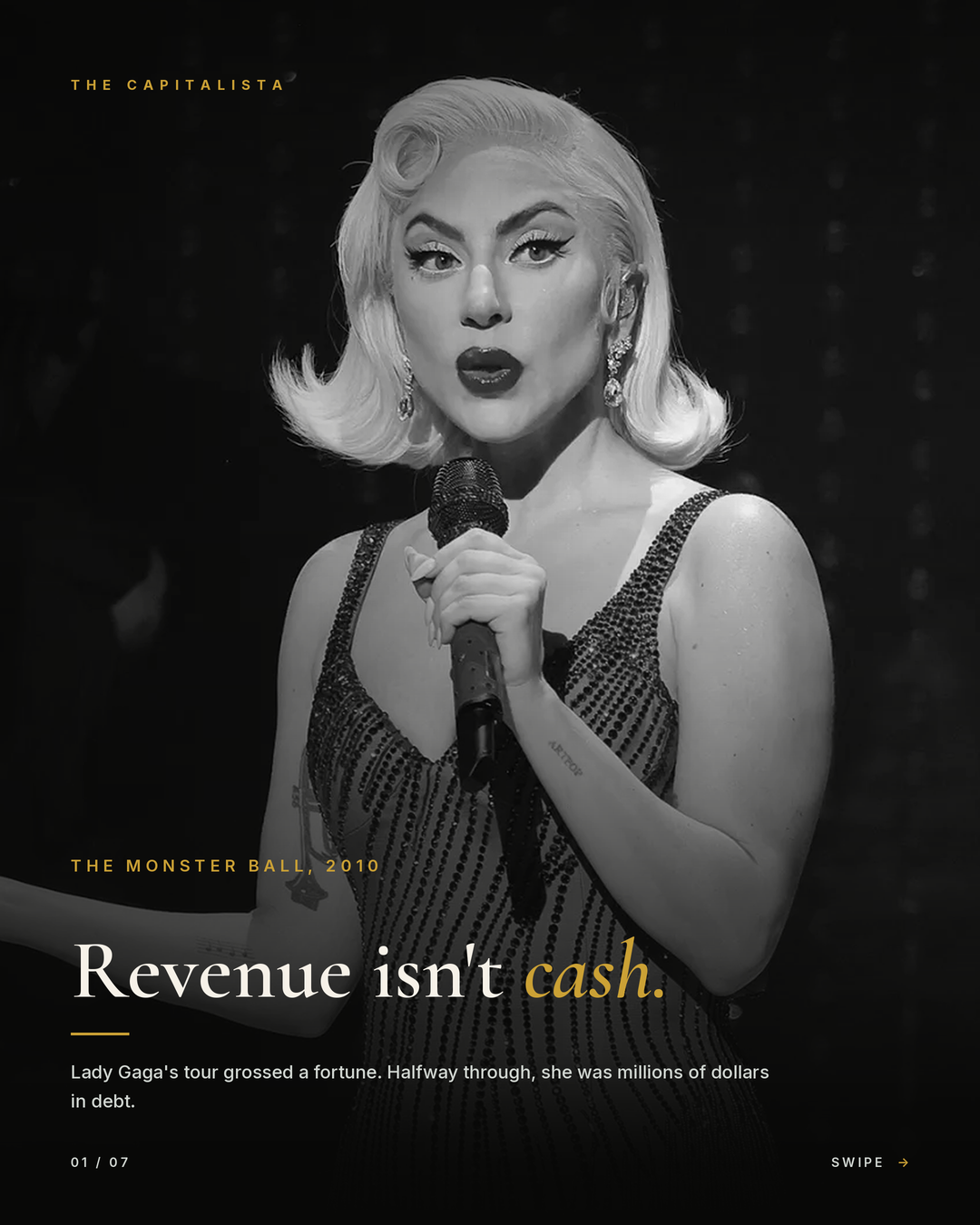
Lady Gaga's Monster Ball tour (2009-2011) is a masterclass in how a massively successful operation can still run out of money.
The tour grossed more than $227 million across 200+ shows, making it one of the highest-grossing tours of its era. Halfway through, she was millions of dollars in debt.
This isn't a story about overspending or poor management. It's a story about cash flow timing, and it's the most important financial lesson most growing businesses never learn.
The Setup: A Fortune on Paper
The Monster Ball was a statement of ambition. Every show was a production. Elaborate staging, backup dancers, multiple costume changes, custom-built sets that had to be transported city to city. Gaga wasn't just performing; she was creating an experience that demanded investment.
Here's the math that looked good on paper: 200+ shows at an average gross per show of over $1 million. Total: $227+ million. A global hit, packed arenas, lines around the block. By every headline measure, a triumph.
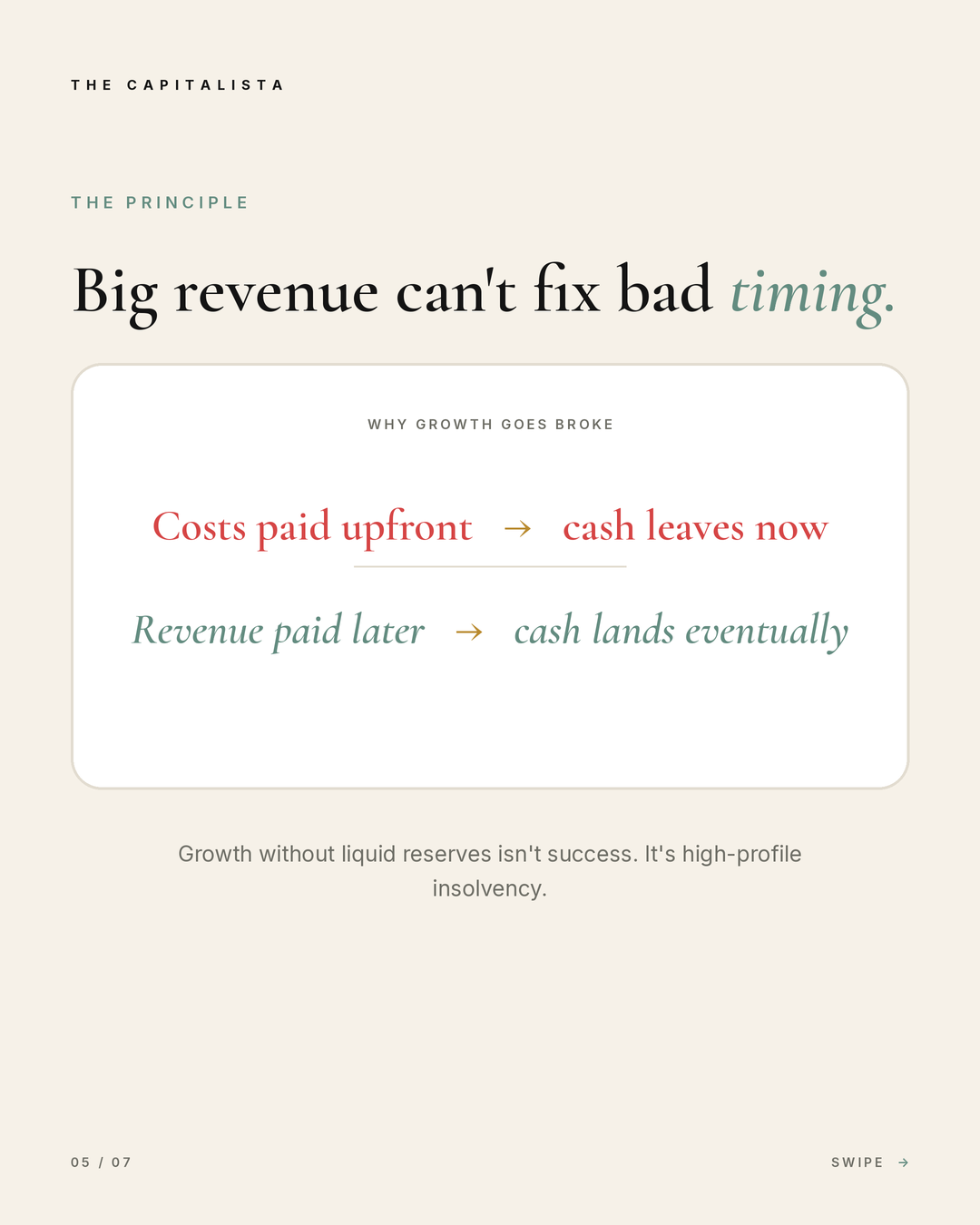
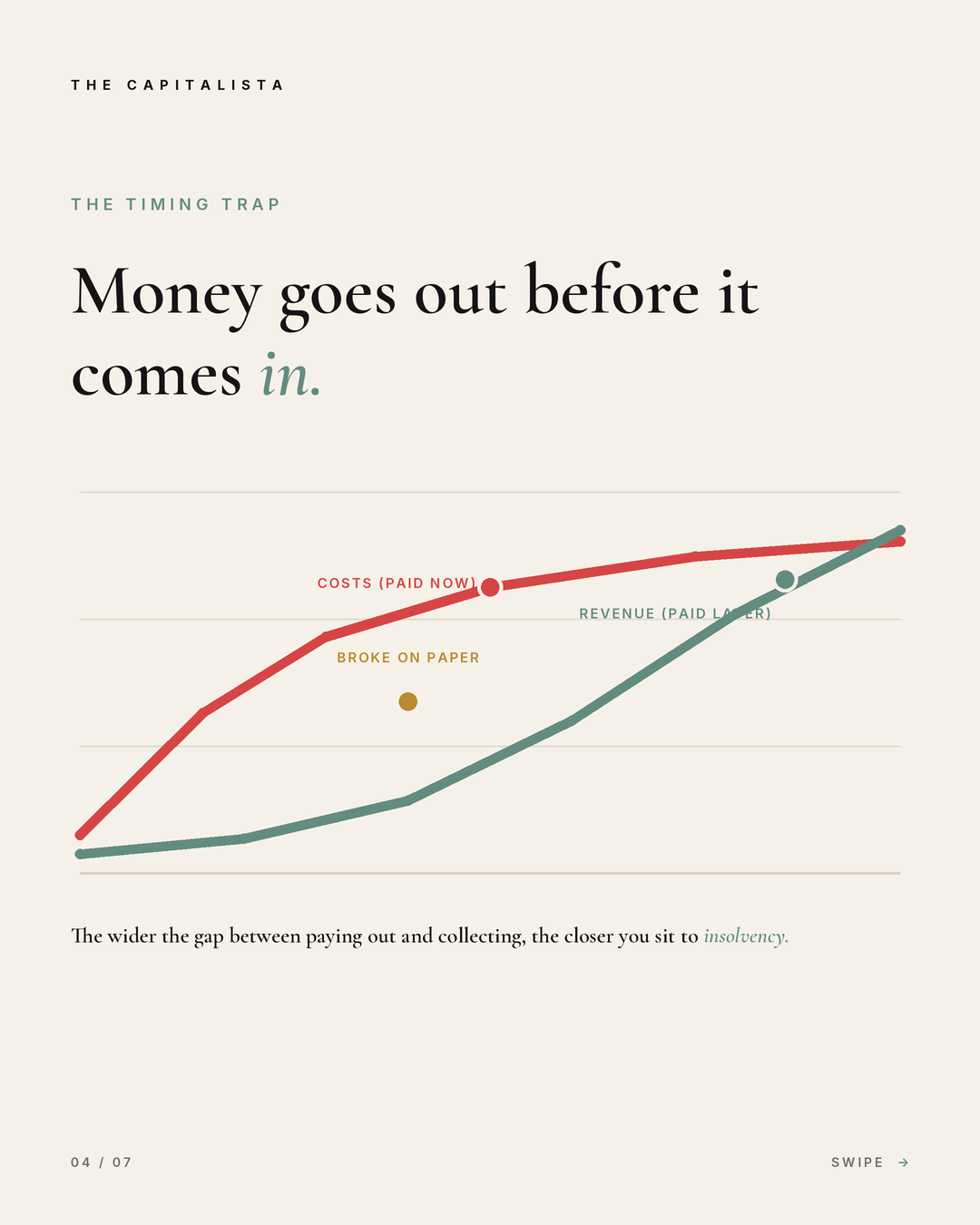
But there was a problem baked into the structure. Gaga had to pay for the show BEFORE the ticket sales came in. Or more precisely, she paid for the infrastructure, staging, and overhead up front, then the money from tickets arrived later — sometimes much later.
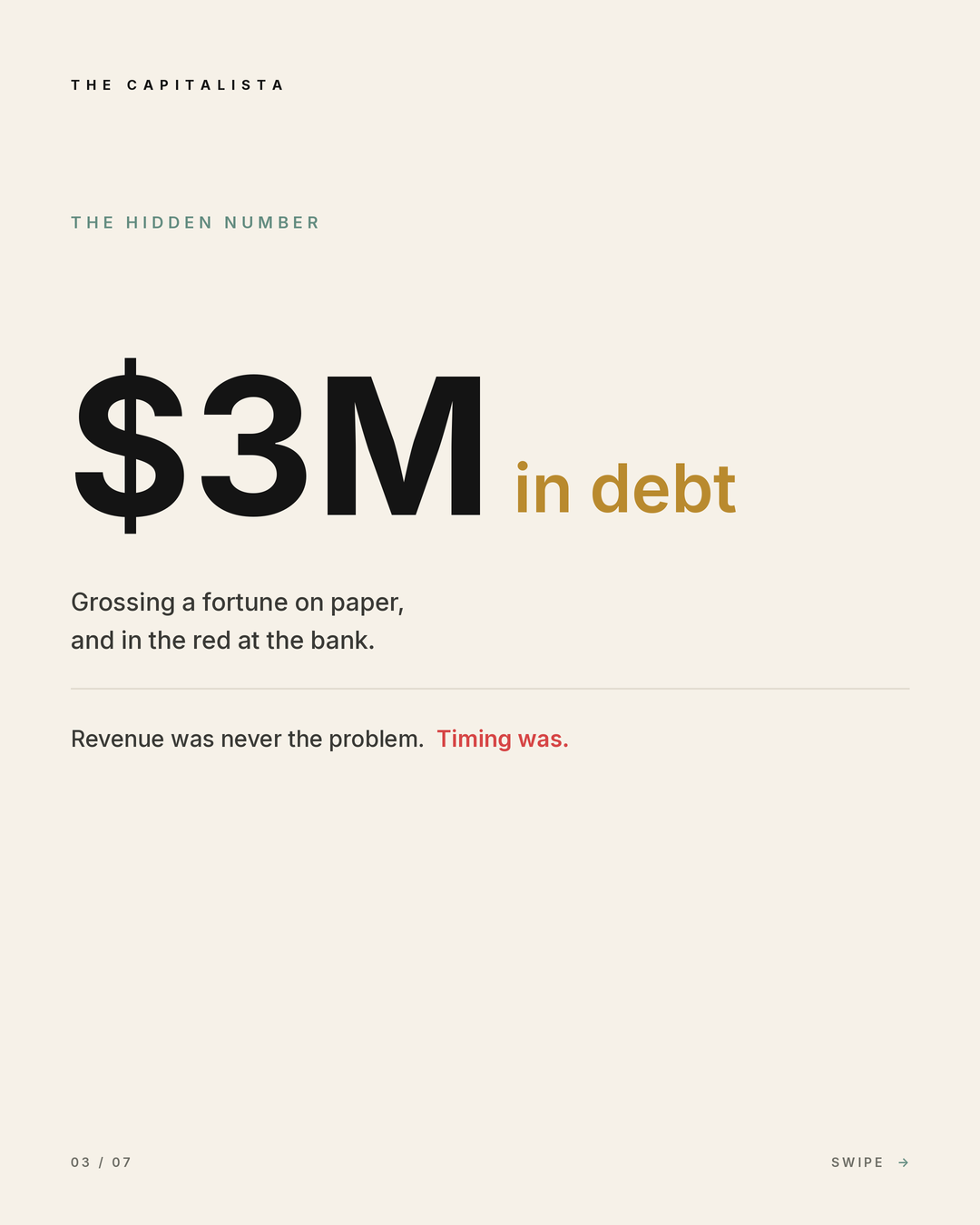
By the time the tour was halfway through, despite the massive gross revenue, she was $3 million in debt.
The Hidden Timing Problem: Money Out Before Money In
This is the cash flow crisis every scaling operation faces, and it's invisible to people who only read revenue numbers.
Here's what happened: to pull off the Monster Ball, Gaga's team had to:
- Build the staging and sets (massive upfront cost)
- Pay the dancers, musicians, and crew for every show (payroll weeks before revenue settles)
- Book the venues and secure the dates (nonrefundable commitments)
- Transport equipment and stage across the globe (constant, predictable expense)
- Cover insurance, permits, security, and logistics (all due before or during, not after)
Meanwhile, ticket revenue didn't flow back to her bank account on the same schedule. Promoters take their cut. Venues take their percentage. The money gets aggregated, invoiced, and settled over weeks or months. By the time the cash actually landed in the bank, it was old money — accounting for shows that happened weeks ago.
So the timeline looked like this:
- Week 1: Pay $500k for staging and crew for this week's shows
- Week 1-2: Shows happen, gross $1M+ in ticket sales
- Week 3: Maybe $600k of that money actually arrives in the account (after promoter fees, etc.)
- Week 2: But you've already committed to pay another $500k for next week's shows
- Week 3: The $600k arrives, but you're already $400k short for this week
That gap — between when money has to leave your bank and when it actually arrives — is the cash flow gap. And it doesn't matter if you're profitable on paper. If the gap is big enough, you run out of cash.
The Paradox That Destroys Growth
Gaga's situation was the perfect storm of success and cash flow mismatch:
- High revenue (check)
- High profitability on paper (check)
- Negative cash flow in real time (also check)
This paradox destroys more growing businesses than actual unprofitability. A struggling business that knows it's losing money will cut costs or raise capital. A successful business that's running out of cash despite huge revenue often misdiagnoses the problem — they think they have a revenue problem when they actually have a timing problem.
The result? A tour that grossed $227 million and left the artist $3 million in the red.
Why This Happens in Every Growth Scenario
This isn't unique to touring. It's the structure of scaling itself.
A SaaS company that sells annual contracts collects money upfront, so they have the opposite problem (great cash flow, but accounting shows slower revenue recognition). A product business that sells wholesale to retailers pays for inventory up front and gets paid 30, 60, or 90 days later. A services business that scales fast has to hire and pay people before the revenue from those hires arrives.
Every business model has a cash flow cycle — the span between when money leaves your account and when it comes back. The longer that cycle, the more working capital you need. And the faster you grow, the more you need it.
Gaga needed about $3 million in working capital to bridge the gap between show costs and ticket revenue. She didn't have it. So she went into debt.
How to See the Real Problem (Before It Becomes a Crisis)
The gap isn't visible in an income statement. It's not in your profit margin. It lives in the timing.
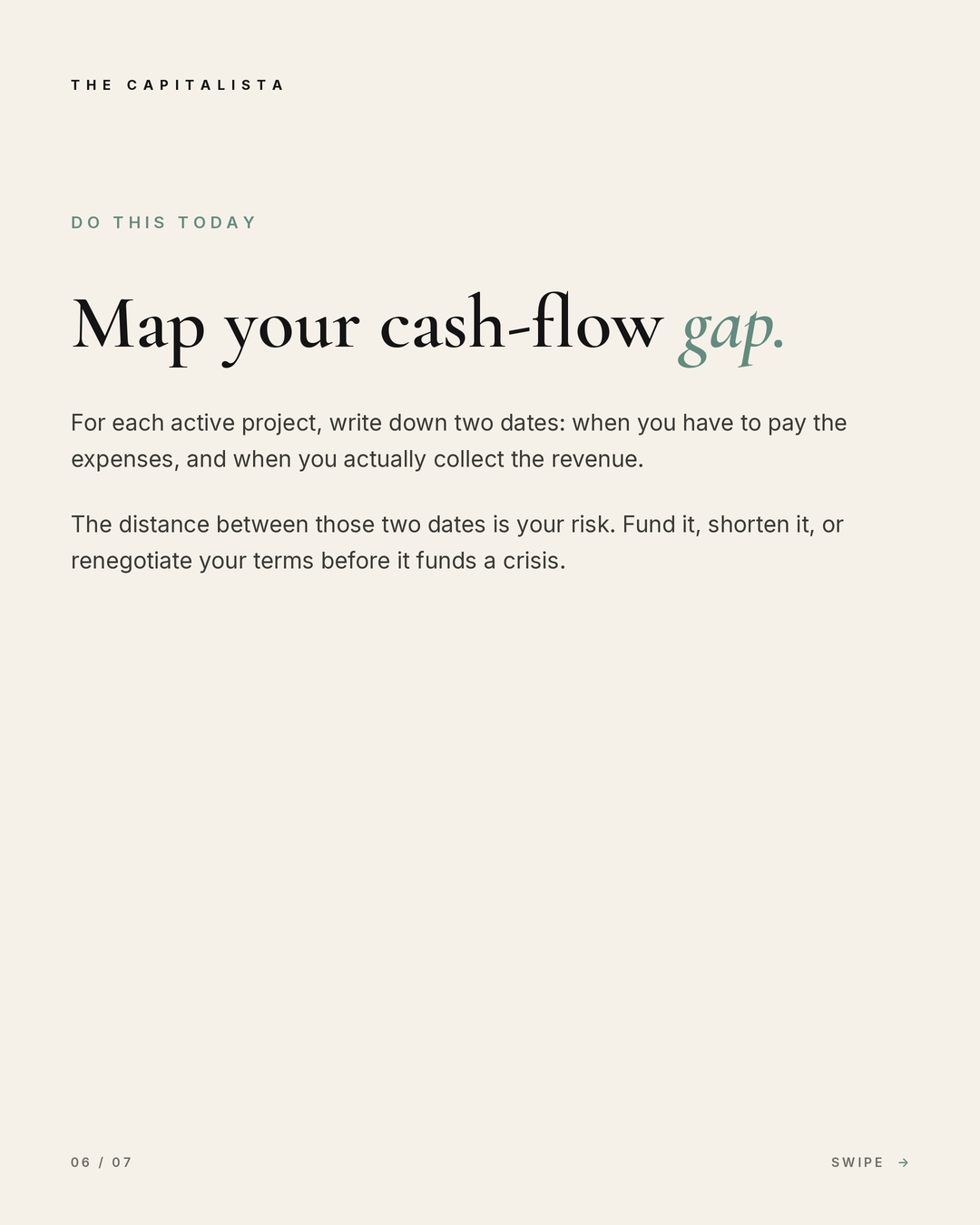
To find it, answer these four questions:
- When do you pay for the thing you're selling? (production, inventory, labor, etc.)
- When do customers pay you for it?
- How big is that gap in days?
- How much money do you need to survive that gap at your current scale?
For Gaga: she paid for shows weeks in advance. Revenue trickled in over weeks or months. The gap was real and large. At her scale — hundreds of thousands of dollars per show in costs, multiplied across a touring schedule — she needed millions in reserves or credit to bridge it.
For a B2B SaaS company selling annual contracts: you collect upfront (gap = 0 or negative, actually favorable). For a retailer selling to wholesale partners: you pay for inventory now, get paid in 30-90 days (gap = significant). For a contractor with 5-person payroll and 30-day client payment terms: gap = the cost of 5 salaries.
What Gaga Did (And What You Should Too)
Gaga took on debt to bridge the cash flow gap. That's not inherently bad. It's actually the right move if the business is profitable and the gap is temporary. Debt to finance working capital is different from debt to cover losses.
But it requires three things:
- Accurate visibility into how big the gap really is
- Access to financing to bridge it
- Confidence that the gap will close as the tour winds down
She had all three. The Monster Ball did eventually become wildly profitable. But it also meant years of carrying that debt, paying interest, and taking on risk that could have bankrupted her if ticket sales had faltered.
The better move, if you see the gap coming, is to prevent it or shrink it:
- Require payment upfront or in advance (collect before you spend)
- Negotiate longer payment terms with suppliers (stretch when you pay out)
- Build working capital reserves before you scale (so the gap is funded by your own cash)
- Raise capital specifically for working capital, not revenue (know it's coming and plan for it)
- Reduce the cycle itself (shorten the time between spending and collecting)
What The Capitalista Does
The Monster Ball tour teaches a financial lesson most operators learn too late: revenue and cash are not the same thing, and timing is what kills companies.
Capitalista is a fractional CFO service that closes this gap for growing businesses. We:
- Map your cash flow cycle so you see exactly when money leaves and when it lands
- Forecast the working capital gap before it becomes a crisis
- Structure payment terms with customers and suppliers to optimize the flow
- Build a working capital strategy so you're not scrambling to finance growth
- Monitor the timing every month so you stay ahead of the problem, not behind it
Gaga's tour became one of the most profitable tours ever. But it didn't have to start $3 million in the red. The gap was predictable. It just wasn't managed.
Frequently Asked Questions
What is the difference between revenue and cash flow?
Revenue is money owed to you. Cash flow is money in your bank account. You can have high revenue and negative cash flow if customers owe you money, or if you've spent cash to create products that haven't sold yet.
Why did Lady Gaga go into debt on a $227M tour?
The Monster Ball required massive upfront investment in staging, crew, and logistics. Ticket revenue didn't arrive fast enough or in the right schedule to cover those costs as they happened. The gap between when she paid for shows and when she collected revenue left her $3 million short.
How big does a cash flow gap have to be to hurt a business?
Even a small gap hurts if you don't have reserves to cover it. A contractor with $10k in monthly payroll and 30-day customer payment terms needs $10k in cash reserves just to survive. A business with $100k in monthly costs and a 60-day payment cycle needs $200k in working capital. If you don't have it, you take on debt or you run out of money.
Can a profitable business still fail because of cash flow?
Yes. Profitability is an accounting measure. Cash flow is a survival measure. A profitable business that can't bridge its working capital gap will eventually run out of cash and collapse, even if the business model is sound.
How do you fix a cash flow timing problem?
Shorten the cycle (collect faster or pay later), build reserves to bridge the gap, raise capital specifically for working capital, or restructure the business model to reduce the gap itself.
The Bottom Line
Lady Gaga's Monster Ball tour grossed $227 million because she put on an extraordinary show. She ended $3 million in debt because she didn't manage the cash flow timing.
The lesson isn't "don't spend money on great production." It's "understand the gap between when you spend and when you collect, and plan for it."
Most growing businesses ignore this gap until it becomes a crisis. By then, it's too late to fix without pain. The operators who see it early — who map it, forecast it, and plan for it — are the ones who scale without running out of money.
If you're growing fast and revenue is up, now is the time to ask: what's the gap between when I pay and when I get paid? And do I have enough cash to survive it?